



The first time you realize you’re hard on yourself in the exact voice you once feared, it can stop you mid-sentence. Maybe it happens when you make a small mistake at work and a familiar script kicks in: You’re such a disappointment. Where did that come from? If this hits close to home, you’re not alone. So many of us carry old pain into adult life, and the path back to feeling worthy often begins with inner child healing—an intentional way of tending the younger parts of you that never felt seen, safe, or enough. It’s not indulgent; it’s maintenance for a nervous system that did its best with what it had.
Key Takeaways
- Inner child healing is about integrating protective parts and offering your younger self the care and safety they missed.
- Body-based safety, self-compassion, and mindful awareness are core skills that rebuild self-worth over time.
- Boundaries and safe relationships translate inner work into lived change and “earned secure” attachment.
- Progress is subtle: kinder self-talk, steadier nervous system, and small, consistent choices.
- Therapeutic support can help you pace the work within your window of tolerance.
Why self-worth breaks in childhood
Self-worth doesn’t shatter all at once. It erodes quietly—through criticism disguised as “tough love,” inconsistent caregiving, or households where big feelings were too much. Maybe you grew up navigating volatility, or you learned your role was to keep the peace. That teaches a child to scan for danger, not to trust their own needs. By the time you’re an adult, that early map still drives your choices, showing up as perfectionism, people-pleasing, or the belief that love must be earned. From the reporting I’ve done, the most common refrain is this: “If I’m perfect, they can’t leave.”
“When a child’s experiences are unpredictable or shaming, they often internalize a global sense of defectiveness. It’s not ‘something bad happened to me,’ it’s ‘I am bad.’ That’s the root of chronic low self-worth.”
— Dr. Lena Morales, PhD, Trauma Psychologist at UCLA
Public health data backs up how common these early injuries are. The CDC’s Adverse Childhood Experiences (ACEs) research shows that about 61% of adults report at least one ACE—such as emotional neglect, household mental illness, or abuse—and around 1 in 6 report four or more. Higher ACE scores correlate with elevated risks for depression, anxiety, chronic health issues, and substance use in adulthood. In 2019, the CDC reiterated that ACEs are widespread across demographics. It’s not destiny, but it is a powerful nudge in one direction. The good news: your brain and body are plastic, and care can be learned later. I’d argue that’s the most hopeful science of the last two decades.
What inner child healing really means
Inner child healing isn’t about regressing; it’s about integrating. You’re building a relationship with the younger parts of you that still carry unmet needs, and giving them what wasn’t available then—attunement, protection, and unconditional worth. That might sound abstract, yet it’s surprisingly practical.
Think of your inner child as a “part” that formed strategies to survive. You might have a hyper-achieving part that keeps you safe by outperforming. You might have a compliant part that prevents conflict by saying yes. These parts worked back then, but as an adult they can step in too strongly, drowning your authentic voice. In my view, the goal isn’t to delete these parts—it’s to let them rest.
“Parts aren’t problems—they’re adaptations. Inner child healing invites a compassionate adult self to step forward, so those protective parts can relax, and the wounded younger parts can receive what they missed.”
— Dr. Aaron Patel, MD, Psychiatrist and IFS-trained clinician
The science that supports rebuilding self-worth
- Stress biology and the brain: Chronic, unbuffered stress in childhood—the kind that isn’t soothed by caring adults—can alter stress response systems and shape emotional regulation into adulthood (Harvard Center on the Developing Child). When you practice inner child healing, you’re essentially creating the buffering relationship you needed, which helps calm an overactive alarm system.
- Self-compassion and mental health: Multiple studies tie self-compassion to lower depression, anxiety, and shame, and to greater resilience.
“People who are self-compassionate are less likely to ruminate on negative events.”
— American Psychological Association
- Mindfulness and emotion regulation: Mindfulness practices can reduce stress and improve mood by training attention and helping people observe emotions without fusing with them (Harvard Health; NCCIH/NIH).
- Self-esteem clarity: Lasting self-worth forms when you feel fundamentally acceptable, not only when you perform, please, or perfect. By meeting your younger self with care, you shift from contingent value to unconditional worth.
Inner Child Healing: how self-worth starts to grow back
When Maya, 28, went through a divorce, she kept thinking, Of course he left—I’m too much. In therapy, she began inner child healing and met the 7-year-old who learned to be small so no one would get mad. Instead of pushing through and “being strong,” Maya started writing daily letters to her younger self, promising to protect her from self-attack. Over time, her internal monologue softened. She still felt waves of shame, but she didn’t believe they told the truth anymore.
Why this works:
- It updates your internal model: Offering care to younger parts provides new emotional experiences that challenge the old belief “no one comes when I cry.”
- It reduces threat and increases safety: Soothing your body teaches your nervous system it doesn’t have to stay in survival mode.
- It builds earned secure attachment: Even if caregivers couldn’t provide steadiness, your adult self can now become a dependable attachment figure to your inner child.
How to start inner child healing when shame feels loud
1) Begin with safety signals in the body
Why: The nervous system drives your sense of safety. Without regulation, the thinking brain can’t update stuck beliefs. Chronic stress can keep cortisol high and promote vigilance (Mayo Clinic).
How:
- Place a hand over your heart and another on your belly. Breathe slowly, like you’re rocking a child from the inside. Name what you feel: “Tightness, heat, fluttering.” No fixing yet—just presence.
- Try a 2-minute mindfulness check-in: notice five things you can see, four you can feel, three you can hear, two you can smell, one you can taste (Harvard Health; NCCIH/NIH).
“Body-based safety isn’t optional with trauma; it’s foundational. When the body knows you’re safe, the inner child can come to the table.”
— Jasmine Lee, LCSW, Somatic Therapist
2) Reparenting dialogues: give language to your inner child
Why: The parts of you that learned “I am unlovable” need a consistent, believable, adult voice. A script helps until it becomes your own.
How:
- Choose a photo of you at a tender age. Look at it for a minute. Imagine what this child needed most—comfort, protection, praise, permission to rest.
- Write or say: “I’m here now. You never had to earn my love. I won’t talk to you like they did. I’ll protect your time, your rest, and your joy.”
- Keep it consistent. Five minutes a day builds trust. Self-worth grows with repetition, not grand gestures.
Inner Child Healing practice: Rewrite old scenes with new support
Why: Memory is reconsolidated—updated each time it’s recalled. Revisiting an old scene while grounded lets you install new meaning and reduce intensity. This is not erasing the past; it’s integrating it.
How:
- Choose a manageable memory (not your most traumatic). Picture it until you feel a little activation.
- Bring your adult self, a loving mentor, or future you into the scene. Maybe they kneel to your height and say, “This wasn’t your fault. I’m taking you out of here now.”
- Let the scene play out with support. Notice shifts in your body. Stop if flooding happens and return to grounding. Slow is fast here.
Boundaries that honor your inner child
Why: Without real-world protection, inner child healing stays theoretical. Boundaries show your younger self that you won’t abandon them to old patterns.
How:
- Start small: Delay responding to messages that pressure you to fix things for others.
- Create an “inner child check”: Before plans, ask, “Does little me feel safe with this?” If not, adjust or decline.
- Use scripts: “I value our relationship, and I can’t take this on right now.”
Repairing relational patterns: practice safe enough closeness
Why: We learn worthiness in relationship. While solo practices help, healing accelerates when someone else reflects your value consistently. You do not need perfect people—just good-enough ones.
How:
- Choose one relationship to practice with—maybe a friend who respects your no. Share your healing goals.
- Try “micro-repairs”: If you feel misunderstood, gently name it within 24 hours. “When that joke landed, a younger part of me felt small. Can we try again?”
Inner Child Healing in daily life: three tiny rituals
- Morning check-in: “What does little me need today?” Maybe it’s five minutes of play, a soft sweater, or leaving work on time.
- Midday compassion pause: Hand to heart, say, “It’s okay to be learning.”
- Evening gratitude for effort, not outcomes: Thank yourself for trying. Retrain the brain to value being over doing.
A mini case story: Evan’s perfectionism softens
Evan, 32, was praised for good grades and scolded for “drama.” As an adult, he chased promotions but felt sick every Sunday night. During inner child healing, he pictured his 9-year-old self frozen at the kitchen table, stomach clenched. Each time he noticed his adult shoulders creeping up, he’d exhale, drop them, and whisper, “I’m proud of you even when you rest.” He also told his manager he wouldn’t reply to emails after 7 p.m. The first week was excruciating. By month three, his sleep improved, and coworkers respected his boundaries. When he slipped, instead of spiraling, he texted a friend: “A little kid in me is scared; remind me I’m still good.” That message—sent instead of suffering alone—was a breakthrough.
Common myths that keep people stuck
- “If I love my inner child, I’ll become weak.” Reality: Self-compassion correlates with greater motivation and resilience (APA).
- “My childhood wasn’t ‘that bad,’ so I shouldn’t be struggling.” Reality: Emotional neglect and unpredictability can be as impactful as overt trauma; ACEs link a range of early experiences to adult health (CDC).
- “I should be over this by now.” Reality: Healing follows nervous system timing, not shame timelines. The brain changes with repeated safe experiences over months and years.
Inner Child Healing: working with triggers without losing yourself
Why: Triggers are body memories asking for attention. Curiosity, not judgment, changes your relationship to them.
How:
- Name the protector: “Ah, here’s my perfectionist part trying to keep me safe.”
- Befriend, don’t battle: Thank it for its service. Ask what it fears would happen if it relaxed.
- Offer an update: “We have adult tools now. Let’s try the gentle way.”
Rituals of repair for shame
Shame says, I am wrong. Repair says, I did something I can learn from.
- Practice “one-degree braver”: Share a tiny truth with someone safe. Your inner child learns that honesty doesn’t always bring punishment.
- Use self-compassion breaks in the moment: Acknowledge common humanity—“Others feel this too”—then ask, “What do I need right now?”
When to get extra support
Sometimes inner child healing opens doors to memories or sensations that feel too big to hold alone. That’s not failure; it’s wisdom. A trauma-informed therapist can help you titrate the work so it stays within your window of tolerance. Finding the right clinician matters more than labels.
Look for clinicians trained in:
- Trauma-focused modalities (e.g., EMDR, parts work, somatic therapies)
- Attachment-based approaches
- Cultural humility and affirming care
If you’re in crisis or have thoughts of self-harm, seek immediate support through local emergency services or trusted hotlines in your region.
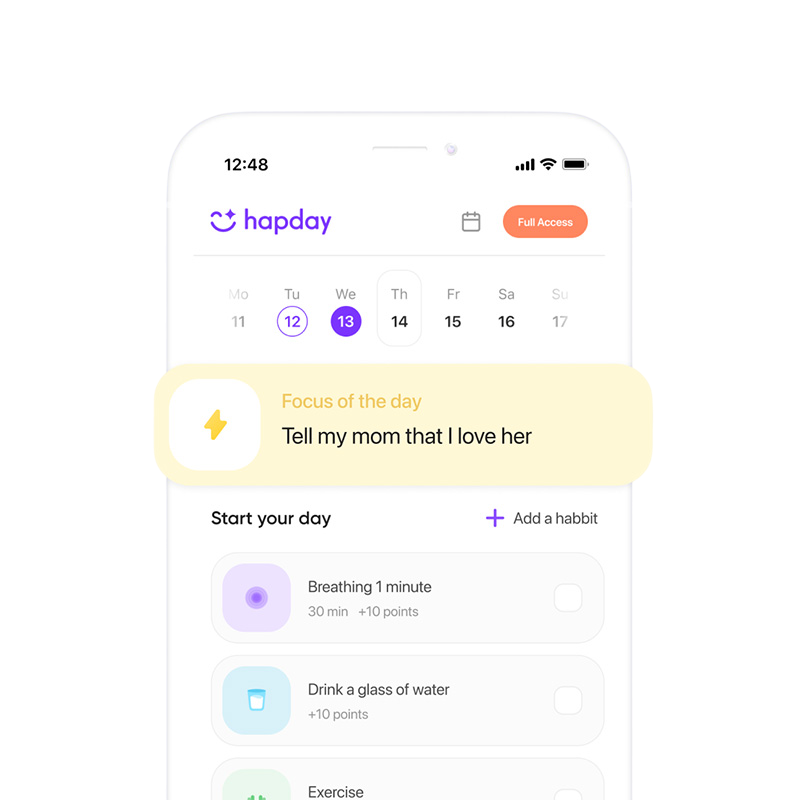
For everyday scaffolding, group programs and digital supports can help you stay consistent, especially with practices like mindfulness that have growing evidence for reducing stress and improving emotional health. Accountability—light, kind, steady—goes a long way.
How to talk to family while protecting your progress
You don’t have to litigate your childhood to reclaim your life. Sometimes direct conversations help; sometimes silence protects your nervous system. Either choice is valid. Choose what keeps you safest.
- If you choose to share: Keep it specific and present-focused. “I’m working on taking better care of myself, so I won’t be discussing certain topics.”
- If you choose distance: Name it as a healing boundary. “I’m taking space to focus on my well-being. I’ll reach out when I’m ready.”
Make sure your inner child knows: “I won’t sacrifice you for anyone’s comfort.”
Inner Child Healing: a gentle weekly rhythm
Anchor the work into your week so self-worth grows sturdy roots. Ritual beats willpower.
- Sunday: 20-minute ritual—light a candle, look at your childhood photo, and write a letter affirming your worth beyond achievements.
- Midweek: 10-minute somatic practice—grounding, breath, a short mindful walk.
- Friday: Connection practice—send a message to a safe person sharing one honest feeling.
- Anytime: “Reparenting micro-choices”—go to bed on time, feed yourself well, pause the doomscroll.
What progress looks like (it’s subtler than you think)
- You catch a self-attack mid-sentence and shift tones.
- You feel anxiety and choose a gentle boundary anyway.
- You cry and then feel relief rather than panic.
- You notice a younger part getting scared and you say, “I’ve got you.”
“Progress in inner child healing isn’t fireworks. It’s a warmer room inside yourself. It’s choosing to speak kindly when it would be easy to abandon yourself. That’s how self-worth rebuilds—choice by tender choice.”
— Dr. Lena Morales, PhD
Inner Child Healing: your next kind step
Try this now. Take one breath for the child who survived. One breath for the adult who’s learning to care. Then whisper, “I belong to me.” Let this sentence become your anchor as you rebuild self-worth, day by day, with inner child healing as your compass.
The Bottom Line
You’re not broken—you adapted. Through consistent body-based safety, compassionate self-talk, and supportive relationships, protective parts can relax and self-worth can return as a steady, lived experience. Start small, go gently, and repeat often. Slow is fast.
About 60-word closing + CTA
You’re not broken—you adapted. With patient inner child healing, safety grows, shame softens, and self-worth returns as a lived feeling, not a wish. If you want steady guidance and daily practices to keep going, explore hapday.me’s supportive programs for emotional growth. Bold choice, gentle steps. Learn more: https://hapday.me/
Start your healing rhythm with hapday.me today.
References
- Centers for Disease Control and Prevention (CDC) — ACEs Fast Facts
- Harvard Center on the Developing Child — Toxic Stress
- American Psychological Association (APA) — Self-compassion overview
- Harvard Health Publishing — Mindfulness meditation may ease anxiety and mental stress
- National Center for Complementary and Integrative Health (NCCIH/NIH) — Mindfulness Meditation: What You Need To Know
- Mayo Clinic — Stress symptoms: Effects on your body and behavior
- American Psychological Association Dictionary — Self-esteem
- The Guardian — Feature on the rise of “trauma-informed” language and care (2021)
- Kristin Neff, PhD — Foundational research and public scholarship on self-compassion (2003–2021)