



On a quiet Sunday afternoon, you promise yourself this round will be different. You light a candle, queue a trauma podcast, underline a new self-help book until the margins nearly glow. By Tuesday, though, the loop tightens—old triggers, same fights, the familiar numbness that sweeps in without asking. If you’ve been at this for months or years and still feel stuck in childhood trauma recovery, you’re not broken. You’re human. Your nervous system is trying to keep you alive—even if it keeps you small in the process.
“Stuck isn’t failure; it’s protection. The brain and body learned strategies in childhood that worked then. Recovery asks those parts to update their job descriptions—slowly, gently, with a lot of safety.”
— Dr. Lena Ortiz, PhD
You may be wondering if you’re truly at a standstill or simply in a slower season. The seven signs below don’t diagnose; they illuminate. If a few sound familiar, treat them as compassionate data points—less verdict, more invitation to adjust how you’re approaching childhood trauma recovery.

Table of Contents
- How it feels to be stuck in childhood trauma recovery
- Sign 1: You collect insights but your daily life doesn’t change
- Sign 2: Your body stays on high alert even when life is calm
- Sign 3: You crave closeness but back away when it shows up
- Sign 4: You bypass anger, say yes when you mean no, and resent it later
- Sign 5: You keep reliving the story—rumination, flashbacks, or numbing cycles
- Sign 6: Your healing depends on someone else changing
- Sign 7: Joy feels out of reach, even when life looks “good on paper”
- The quiet consequences of being stuck—and why it’s not your fault
- What gets you unstuck in childhood trauma recovery
- A few more real-world snapshots
- Hope, by design
- About the Author’s Intent and Where to Get Daily Support
- Summary + CTA
- The Bottom Line
- References
Key Takeaways
- Feeling stuck is a protective nervous-system response, not a personal failure.
- Pair insight with tiny, repeatable practices to create change.
- Work directly with the body to recalibrate hypervigilance and stress.
- Repair in relationships through small, timely actions and clear boundaries.
- Measure progress by capacity signals, not the absence of triggers.
How it feels to be stuck in childhood trauma recovery
Before the signs, a frame helps. Adverse childhood experiences (ACEs)—emotional neglect, household instability, abuse—are common, almost shockingly so. The CDC estimates that about 61% of adults have lived through at least one ACE; nearly 1 in 6 report four or more. Those histories are linked with higher risks of depression, anxiety, sleep disruption, and chronic health problems later on. Which is why healing is rarely a sprint; it’s closer to a season-long marathon with a few hills (CDC).
The science also explains why sheer willpower tends to stall. Chronic early stress recalibrates the stress-response system, turning the internal alarm up and leaving it there. Harvard’s Center on the Developing Child calls this “toxic stress”—the kind that alters brain and body development when there isn’t enough buffering from stable, caring relationships (Harvard Center on the Developing Child). Knowing this shifts “stuck” from a personal flaw to a nervous-system reality. In my opinion, that reframe alone can lower shame a few degrees.
Sign 1: You collect insights but your daily life doesn’t change
When Maya, 28, went through her divorce, she became a walking library. She could name attachment wounds, spot every trauma response, quote three podcast hosts on inner child healing. Yet one text from her ex sent her body into a full panic spiral. Insight wasn’t crossing the bridge into skill.
Why it happens: Insight lives in the thinking brain; trauma nests in the survival brain. The nervous system doesn’t update because we “know better.” It updates through new experiences repeated in safety. Evidence-based therapies such as CBT and exposure-based work help in part because they pair understanding with practice between sessions (American Psychological Association). My take: practice beats insight nine times out of ten.
How to shift: Choose one practice and make it almost absurdly small. Not “set boundaries,” but “write a two-sentence boundary template for one person.” Not “regulate my nervous system,” but “five minutes of breathwork after lunch.” Track repetitions, not perfection. You’re teaching your body a new language—daily exposure is the Rosetta Stone.
Sign 2: Your body stays on high alert even when life is calm
You triple-check the locks. Your shoulders refuse to drop. It’s Tuesday afternoon but your pulse behaves like there’s a siren outside. Chris, 33, finally moved into a quiet apartment and still woke at 3 a.m., heart pounding, scanning for threats that weren’t there.
Why it happens: Repeated early stress sensitizes the brain’s alarm system. The body learns “constant readiness equals survival” and keeps you braced. This is physiology, not just psychology. Toxic stress reshapes how the stress-response system functions (Harvard Center on the Developing Child). Adults with multiple ACEs report higher rates of anxiety, sleep disturbance, and medical risks (CDC). I see this sign more than any other in interviews.
How to shift: Work directly with regulation. Try orientation (name five things you see, four you feel, three you hear), diaphragmatic breathing, or progressive muscle release. Somatic therapy can help reset your baseline.
“You can’t think your way out of a body alarm. You have to show your body, again and again, that the room is safe.”
— Jamal Brooks, LCSW
Sign 3: You crave closeness but back away when it shows up
You miss people deeply, then feel smothered when they lean in. When Lina, 26, started dating someone kind, she found herself picking fights over small things. She wasn’t being dramatic. She was guarding old bruises.
Why it happens: Emotional neglect or inconsistent caregiving can pair intimacy with danger. Your attachment system wants connection; your survival system wants control. That tug-of-war can look like dating the unavailable, sabotaging good bonds, or shutting down feelings when someone gets close. Attachment research shows these early patterns frequently echo into adult relationships, shaping proximity, conflict, and repair (American Psychological Association). Healthy skepticism of closeness can be wisdom—until it calcifies.
How to shift: Name it with compassion: “Here’s my closeness alarm.” Practice tolerating 2% more intimacy at a time—answer a vulnerable question, accept help once, share a boundary and stay present. Couple’s therapy or attachment-focused individual work can draft new safety maps.
Sign 4: You bypass anger, say yes when you mean no, and resent it later
If speaking needs in childhood brought shame, withdrawal, or punishment, people-pleasing likely kept you safe. In adulthood, it mutates into overcommitment, burnout, and quiet resentment. You may call yourself “easygoing,” but the body keeps the score: stomach knots, headaches, fractured sleep.
Why it happens: Anger is a boundary-setting emotion. When we suppress it, we lose crucial data: “Something isn’t okay.” We default to the fawn response—appease, accommodate, avoid conflict—to ward off rejection. Over time, stress compounds, mood dips, health wobbles. Learning assertiveness reduces stress and supports self-respect (Mayo Clinic). In my book, clean anger is a form of care.
How to shift: Start with micro-assertions. Swap apologies for appreciation: “Thanks for understanding” instead of “Sorry I’m a mess.” Use a simple boundary script: “I’m not available for that; here’s what I can do.” Practice in low-stakes settings (a coffee order, a return policy) before high-stakes ones (family patterns). If anger feels frightening, work with it in therapy. Anger that is felt is anger that can be steered.
Sign 5: You keep reliving the story—rumination, flashbacks, or numbing cycles
Your mind reruns the past at 2 a.m., or you go offline to avoid it. Both are common adaptations. Some readers describe “time traveling”—they know they’re safe, but their body insists it’s 2005 again. The year may be different for you, but the sensation is the same.
Why it happens: Intrusive memories, avoidance, negative mood shifts, and hyperarousal are hallmark PTSD features (National Institute of Mental Health). Without a formal diagnosis, many trauma survivors still ricochet between overactivation and shutdown. That rhythm protects you—but it narrows life. The Guardian reported in 2021 on the spike in trauma-like sleep disruptions post-lockdown; the pattern mirrored what clinicians were seeing in session rooms nationwide.
How to shift: Create “ritual exits” from the past. After journaling or therapy, ground—hold an ice cube, stand barefoot, or say today’s date and three things you can see right now. Mind-body practices help regulate arousal and re-anchor attention; there’s decent evidence for mindfulness, yoga, and relaxation techniques (National Center for Complementary and Integrative Health). If rumination spirals, set a 10-minute “worry window,” then redirect to a chosen task.
Sign 6: Your healing depends on someone else changing
You wait for a parent to apologize, a partner to communicate flawlessly, a therapist to say the perfect sentence. Accountability matters—harm calls for repair. But tethering your recovery to someone else’s behavior can stall your own.
Why it happens: In childhood, your wellbeing literally depended on caregivers. As an adult, that template can persist. Externalizing control can feel safer than facing the grief that some people may never show up as you needed. The waiting room can be a kind pause; it becomes a trap when it blocks actions you can take now. My view: hoping for repair and building your life are parallel tracks, not competing ones.
How to shift: Separate relational repair from personal recovery. You can honor the need for apology and still practice self-soothing, boundaries, and inner child care today. Try a both/and mantra: “I deserve repair, and I will repair with myself.” Build a support web that includes peers, not only professionals, so progress doesn’t hinge on one person.
Sign 7: Joy feels out of reach, even when life looks “good on paper”
You check the boxes—job, apartment, perhaps a loving partner—and life tastes like cardboard. That’s more than a bad week; it may be anhedonia, the blunting of pleasure that often follows chronic stress or depression.
Why it happens: Prolonged adversity dulls reward circuitry. It is a survival economy: when your system is scanning for threat, it invests less in play, exploration, and savoring. Depression, affecting an estimated 280 million people worldwide, frequently shows up as a loss of interest or pleasure (World Health Organization). After the 2020 lockdowns, many readers wrote to say that joy felt theoretical. Joy muscles don’t disappear—they decondition.
How to shift: Start with micro-joys—tiny, repeatable sparks you can dose daily. Sip a hot drink with full attention. Stand in sunlight, eyes closed. Play a 30-second song you loved at 12 and move your shoulders.
“Joy often returns in sips before it comes in gulps. Expand your window of tolerance for goodness by noticing it, even for a breath.”
— Dr. Priya Nair, MD
If low mood or loss of interest persists, speak with a clinician. Treating depression and trauma together can unlock energy for growth.
The quiet consequences of being stuck—and why it’s not your fault
Being stuck in childhood trauma recovery isn’t just frustrating. It carries consequences—strained relationships, stalled careers, health flare-ups, and an aching sense of being outside your own life. ACEs research connects early adversity to a wide net of adult health and mental health outcomes, underscoring why getting unstuck is both self-love and prevention (CDC). None of this is your fault. Your adaptations were brilliant survival moves. They just need upgrades for the adult life you’re building. That’s a hard truth—and a hopeful one.
What gets you unstuck in childhood trauma recovery
- Make safety the strategy, not the prize. Don’t wait to feel safe to act; act to cultivate safety. Stabilize basics first—sleep, food, movement, and routine. Low-friction habits tell your nervous system, I’ve got you.
- Pair insight with reps. Weekly, choose one micro-skill related to the sign you’re working on—an assertive “no,” a 3-minute body scan, a boundary script—and repeat it until it’s boring. The aim isn’t intensity; it’s consistency (APA; NCCIH).
- Tend the body directly. Hypervigilance softens through bottom-up inputs—breathing, gentle movement, cold-water face splashes, co-regulation with safe people. Over time, the baseline recalibrates.
- Repair in relationships. If attachment wounds isolate you or make you reactive, practice tiny repairs: “I snapped earlier; I care about this and want to try again.” Small, timely repairs build trust faster than long-winded explanations.
- Measure what matters. Track capacity signals—how quickly you return to baseline after a trigger, how often you notice needs, how many minutes of joy you tolerate—rather than tallying “no triggers this week.”
- Allow grief. Many of us stay stuck holding the boulder of “it should have been different.” Making room for grief frees your hands to build what can be.
- Get help that fits you. Trauma-informed therapy, peer groups, and structured programs offer containment and daily scaffolding that self-help can’t. If the first fit misses, that’s not failure; it’s data to refine your search.
A few more real-world snapshots
- After years of reading about boundaries, Maya rehearsed one line in the mirror: “I’m not able to take that on.” She used it once a week for a month. The first time, her hands trembled. By week four, there was a small, clean pride—body-level proof that new endings were possible.
- Chris built a five-minute “evening switch”: dim lights, warm handwash, three slow exhales, then a short playlist. The 3 a.m. wake-ups didn’t vanish, but they arrived less charged. His system was learning the shape of calm.
- Lina told her new partner, “Sometimes closeness flips a switch in me. If I pull away, I’ll text: ‘Closeness alarm. I care about you and need 20 minutes.’ Please check in after.” They tested it three times in one month. Each recovery came quicker.
Hope, by design
If you’re still here, you’re already practicing one of the most healing moves there is: staying with yourself. That matters. You aren’t the sum of your symptoms. You are a person whose mind and body learned brilliant survival strategies—and who now deserves updated tools, steadier support, and daily reminders that safety and joy are learnable skills.
“We’re not trying to erase your past. We’re inviting your system to write new chapters.”
— Dr. Lena Ortiz, PhD
Being stuck in childhood trauma recovery isn’t the end of your story. It’s a signpost. It points toward smaller steps, deeper safety, and support that meets you where you are—no heroics required.
If this sounds like you, circle one sign this week and choose a single three-minute action to practice. Repeat it five times. Call that progress. Because it is.
About the Author’s Intent and Where to Get Daily Support
I write for people like you—Gen Z and Millennial adults who’ve carried too much for too long and are ready to heal with science, compassion, and structure. If you want steady guidance and bite-sized practices so you’re not doing this alone, there are places built for that.
Summary + CTA
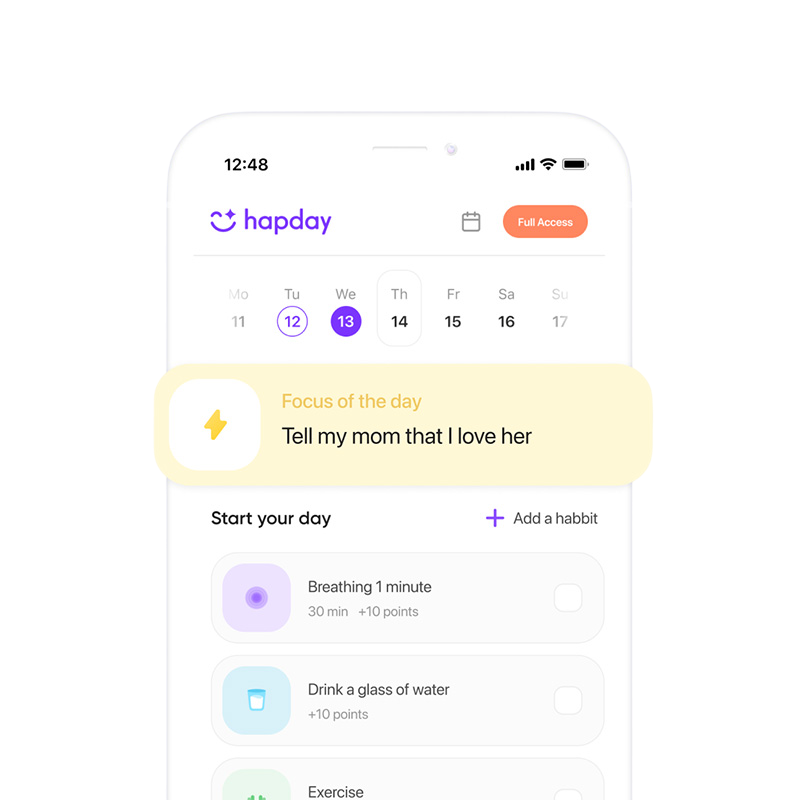
You’re not failing—you’re adapting. If you feel stuck in childhood trauma recovery, look for patterns like hypervigilance, people-pleasing, stalled action, or numbed joy. Pair insight with tiny daily reps, regulate your nervous system, and seek support that fits. Small, consistent steps rewire safety. Next step: explore daily tools and guided programs at hapday.me to steady your healing.
The Bottom Line
Feeling stuck means your system is protecting you with old strategies. With gentleness and structure—small reps, body-first regulation, relational repair—you can update those strategies and grow your capacity for safety, connection, and joy. Go small, go steady, and let support meet you where you are.
Closing note for anyone who feels behind
Maybe you thought you’d be “over it” by now. Maybe watching others heal quickly makes you question yourself. Remember: the pace of recovery often mirrors the pace of injury. Early-life wounds unfolded over years; they deserve patience. Your job isn’t to fix yourself—it’s to befriend yourself while you learn what helps. Even if you’re stuck in childhood trauma recovery today, you can design tomorrow to be 1% kinder to your nervous system. It’s slow work, and that is okay.
References
- Centers for Disease Control and Prevention (CDC) — Adverse Childhood Experiences (ACEs)
- Harvard Center on the Developing Child — Toxic Stress
- American Psychological Association — Understanding psychotherapy and how it works
- National Institute of Mental Health — Post-Traumatic Stress Disorder (PTSD)
- National Center for Complementary and Integrative Health — Mind and Body Approaches for Stress
- Mayo Clinic — Assertiveness training: Reduce stress, communicate better
- World Health Organization — Depression fact sheet
Image credit: stock photo used under license from Unsplash (descriptive alt text provided above).