


Key Takeaways
- Healing starts by honoring your body’s signals and building nervous-system safety through small, repeatable practices.
- Connection, sleep, mindful grounding, and trauma-informed therapy are evidence-backed pillars of recovery.
- Map triggers, practice self-compassion, and set gentle boundaries to replace old survival patterns with new choices.
- Consistency beats intensity: look for modest, steady improvements over time, not overnight change.
- It’s okay to go slowly; fit and safety with people and practices matter more than any single “perfect” method.
Introduction
On a Tuesday morning that looked harmless enough, you open a calendar invite from your boss and feel your heart seize. It’s a simple one-on-one check-in, but your chest tightens and your mind spins with what-ifs. You’re an adult with a decent life now, yet your body seems to be bracing for impact. Across fifteen years of reporting on trauma and interviewing survivors, I’ve heard this scene — or some echo of it — more times than I can count. If it feels familiar, you’re not broken. You’re carrying the residue of earlier wounds — and childhood trauma recovery can begin right here, right now, in the life you actually have. My view: healing starts the instant we stop arguing with our bodies.
Starting doesn’t mean recounting every painful memory at once. It can be as modest — and as radical — as choosing safety, self-compassion, and one doable action today.
“The nervous system learns safety by experience, not by argument. Recovery starts with giving your body a different experience, one small moment at a time.”
— Dr. Lena Ortiz, Clinical Psychologist and Trauma Specialist
Why Your Reactions Make Sense
- Childhood adversity is common. The CDC estimates about 61% of adults in the U.S. have experienced at least one type of adverse childhood experience, and nearly 1 in 6 have experienced four or more, which is linked to higher risks for mental and physical health problems in adulthood (CDC). If that statistic leaves you less alone, good — it should.
- These experiences can shape brain and stress responses. The Center on the Developing Child at Harvard describes how “toxic stress” — intense, prolonged adversity without adequate support — can disrupt brain architecture and stress systems (Harvard Center on the Developing Child). A 2021 Harvard brief put it bluntly: context wires biology.
- Trauma is stored in patterns of protection. The National Institute of Mental Health explains how trauma-related symptoms, like hypervigilance or emotional numbing, are the nervous system’s attempts to keep you safe after threat (NIMH). Personally, I think we underappreciate how faithful — and costly — those patterns can be.
So if you freeze when someone raises their voice, or you feel nauseous when a partner says “We need to talk,” your body is checking old maps of danger. Childhood trauma recovery isn’t about willpower or “getting over it.” It’s about teaching your body and mind new maps — slowly, reliably, and with respect for what helped you survive. That respect matters; contempt stalls healing every time.
What “Start Today” Really Means
You might picture therapy right away, and therapy can be transformative. But the very first step is stability. NIMH suggests tending to basics — sleep, food, movement, connection — because your brain and body heal faster when they feel safe enough (NIMH). When your system is less flooded, you can explore memories and patterns without retraumatization. Stability is not glamorous; it is the quiet engine of recovery.
“Regulation before exploration. When your body isn’t in a fire alarm, you can think, feel, and choose more freely.”
— Dr. Sarah Chen, Psychiatrist specializing in trauma-related disorders
Childhood Trauma Recovery: The Science Behind Why These Steps Work
- Safe connection is medicine. Supportive relationships help buffer stress responses and build resilience across the lifespan (Harvard Center on the Developing Child). In 2023, the U.S. Surgeon General called loneliness an epidemic; I’m convinced connection is both treatment and prevention.
- Mindfulness and grounding can settle the stress response. Evidence reviewed by the NIH’s National Center for Complementary and Integrative Health shows mindfulness can reduce stress and improve well-being for many people (NCCIH/NIH).
- Therapy works. The American Psychological Association notes that psychotherapy is effective for a wide range of difficulties, and trauma-focused approaches like cognitive behavioral therapies are strongly supported (APA; APA PTSD Guideline).
- Sleep repairs. The NIH’s NHLBI explains how sleep stabilizes mood, attention, and stress hormones — all essential in trauma healing (NHLBI/NIH).
How to Begin — Gently and Concretely — Today
Start with one small, doable action that increases safety. The following steps are designed to be kind, realistic, and repeatable.
1) Create a 10-minute daily safety practice
Why it helps: Trauma pulls the body toward fight/flight or shut-down. Small, consistent “micro-doses” of regulation teach the nervous system that the present is safer than the past. Ten minutes isn’t trivial; it’s training.
How to try it:
- Choose one of these for 5–10 minutes:
- Paced breathing: Inhale 4, exhale 6, 20 cycles. Longer exhales cue the parasympathetic system.
- Orienting: Slowly look around the room and name five non-threatening things you see right now. Let your neck and eyes move.
- 5-4-3-2-1 grounding: 5 things you see, 4 feel, 3 hear, 2 smell, 1 taste.
- Pair it with something you already do (after brushing teeth, during your commute). Habit stacking trims friction.
- Track how “charged” you feel before and after on a 0–10 scale. Tiny improvements count.
Mini case: Jae, 31, started with 4 minutes of 4–6 breathing before Zoom meetings. In a month, their pre-meeting dread dropped from a 7 to a 4. “It didn’t fix everything,” they said, “but it took the edge off enough that I could actually speak up.”
2) Map your triggers and unmet needs
Why it helps: Noticing patterns transforms confusion into clarity. The brain is a prediction machine; when you name triggers, you reclaim the steering wheel.
How to try it:
- Keep a “pattern log” for two weeks. When you feel a spike or shut-down, jot:
- What happened? (facts)
- What I felt in my body and emotions?
- What did I need in that moment? (comfort, clarity, space, reassurance)
- Once a week, skim your notes. Circle repeating themes.
- Offer yourself an alternative: “Next time I feel X, I will try Y.” For example, “Next time I hear criticism, I will place a hand on my heart and ask for a pause.”
There’s good evidence that expressive writing supports emotional processing and physical health for many people (APA). Honest writing isn’t therapy’s rival; it’s its ally.
3) Build inner safety with self-compassion
Why it helps: Shame freezes healing. Self-compassion lowers physiological stress, supports emotion regulation, and makes change stick (Harvard Health).
How to try it:
- The 30-second self-compassion break:
- Notice: “This is a moment of pain.”
- Normalize: “Pain is part of being human; I’m not alone.”
- Nurture: “What do I need now?” Then take one small step.
- Pick a tender photo of yourself as a child. Place it where you’ll see it. Each evening ask: “What did you need today that you didn’t get?” Offer it now — a warm drink, a walk, a boundary.
- Write a kind, protective note to your younger self before bed.
4) Choose one relationship for safer connection
Why it helps: Safe people co-regulate us. The body learns calm in the presence of trusted others (NIMH).
How to try it:
- Identify your “circle of safety”: one friend, one colleague, one family member, one professional or peer group. You don’t need many — just a few emotionally reliable anchors.
- Use a boundary script with one person this week: “When X happens, I feel overwhelmed. I’m going to do Y to take care of myself. I care about you and want us to keep talking.”
- Schedule a 20-minute walk or tea with the one person who leaves you feeling lighter, not smaller.
Mini case: After a brutal breakup, Maya, 28, noticed she felt safest with her aunt. She texted: “Can we have a no-advice tea on Sundays? I just need to be seen.” That small rhythm softened her Sunday blues and steadied her during big decisions.
5) Understand therapy options and make a low-pressure first contact
Why it helps: Trauma-focused therapies can rewire patterns and reduce symptoms like nightmares, hyperarousal, and avoidance (Mayo Clinic). Strong evidence supports cognitive behavioral approaches such as cognitive processing therapy and prolonged exposure (APA).
How to try it today:
- Pick one modality to explore: “trauma-focused CBT,” “prolonged exposure,” or “trauma-informed therapy.” Read one APA page to orient yourself (APA).
- Draft a short reusable email: “I’m seeking support for childhood trauma recovery. I’d like to know your approach, fees, availability, and whether you offer a brief consult.”
- Reach out to two providers, even if your voice shakes. You’re just gathering data. The right fit matters more than the “perfect” modality.
“Look for a therapist who invites your pace and checks in with your body. The alliance — that sense of feeling respected and safe — is often the most healing element.”
— James Okafor, LCSW, Somatic Therapist
6) Reparenting: give yourself what you didn’t receive
Why it helps: Consistent care from within can repair attachment wounds. Responsive relationships are a powerful driver of resilience — and you can learn to be a responsive caregiver to yourself (Harvard Center on the Developing Child).
How to try it:
- Morning check-in: “How old does my body feel today?” If you sense a younger part, ask: “What would help you feel safe this morning?”
- Create two rituals: a predictable morning anchor (light stretching, warm shower, nourishing breakfast) and an evening wind-down (screen dimming, tea, 10-minute tidy). Predictability tells your nervous system, “An adult is here now.”
- When overwhelmed, put one hand on your heart, one on your belly. Say, “I’ve got you. We’re not alone. I will move slowly.”
7) Body care that doesn’t trigger you
Why it helps: Movement and rest regulate stress chemistry and mood. Adequate sleep supports brain function and emotional health (NHLBI/NIH).
How to try it:
- Sleep windows: Pick a consistent 7–8 hour sleep opportunity most nights. Use dim lights and a 30-minute tech-free buffer before bed.
- Gentle movement: Choose non-competitive, low-intensity options — walking, stretching, slow dancing to one song in your kitchen.
- Eat to steady: Aim for steady blood sugar with regular meals and protein. When in doubt, snack first, process feelings second.
8) Measure progress with compassion, not perfection
Why it helps: Healing feels non-linear. Tracking gains teaches realism and hope.
How to try it:
- Weekly wins: Note three micro-wins every Sunday. Examples: “I asked for a pause,” “I slept 6.5 hours,” “I noticed a trigger and took three breaths.”
- Choose a single anchor metric for 4 weeks: panic intensity, nightmares per week, or time to return to baseline after being triggered. Look for 10–20% improvements.
- When you slide, ask: “What kept me safe in the past that might be overfiring now?” Thank the old strategy. Then choose a gentler one.
9) Prepare a simple safety plan for hard days
Why it helps: Having a plan reduces panic during spikes of distress. Planning isn’t pessimism — it’s care.
How to try it:
- Write three names you can contact, in order.
- List three practices that help most (for example: splash cold water, step outside, text “Are you free to listen?” to a friend).
- If you ever feel at risk of harming yourself, seek immediate help through local emergency services. Keep resources visible and reachable.
Childhood Trauma Recovery: what to expect in the coming months
- Month 1: A little more awareness, a little more steadiness. Your daily 10-minute practice becomes normal-ish. You may still get hijacked, but you recover slightly faster.
- Month 2–3: You begin to notice patterns earlier and set clearer boundaries. Sleep may improve if you protect your wind-down.
- Month 4–6: If you start therapy, you’ll likely have a clearer sense of goals. You’re practicing new responses while honoring grief for what you lost or never received.
This isn’t linear. Some weeks you’ll feel like you’re moving backward. That’s when you return to basics: breath, body, and one safe person. As APA emphasizes, the process of psychotherapy — and recovery more broadly — unfolds over time, and it’s effective when you stay engaged with supports that fit you (APA). My take: consistency beats intensity.
Holding the both/and
You can honor that terrible things happened and also claim a gentler life now. You can respect your protective parts and also teach them new jobs. You can ask others to meet you differently and also learn to meet yourself with kindness. Both can be true — it’s the maturity of recovery.
When Andre, 34, realized he shut down every time his manager gave feedback, he practiced a new script: “I want to understand. Can I take notes and circle back in an hour?” He paired it with three rounds of 4–6 breathing. Six weeks in, he felt “less like a scared kid and more like a steady adult.” That’s childhood trauma recovery in everyday clothes — subtle on the surface, profound underneath.
Childhood Trauma Recovery: your first tiny step right now
- Pause. Feel your feet. Lengthen your exhale.
- Ask, “What would make the next hour 5% kinder?”
- Do that one thing. Then, if you have capacity, send one therapy inquiry or text one safe person.
“Healing is not about becoming someone new. It’s about remembering the self you had to hide — and giving that self a stable home in your life now.”
— Dr. Lena Ortiz, Clinical Psychologist and Trauma Specialist
The Bottom Line
You’re allowed to start where you are and go slowly. Safety, self-compassion, and small, steady actions retrain your nervous system and reshape your daily life. Choose one gentle practice, connect with one safe person, and keep repeating. Quiet progress adds up.
Summary + CTA
You can begin childhood trauma recovery today by choosing nervous-system safety, small daily practices, and one brave outreach for support. The science is on your side, and your pace is valid. Tiny actions — breath by breath, boundary by boundary — rewire your life. It’s slow work because it’s deep work.
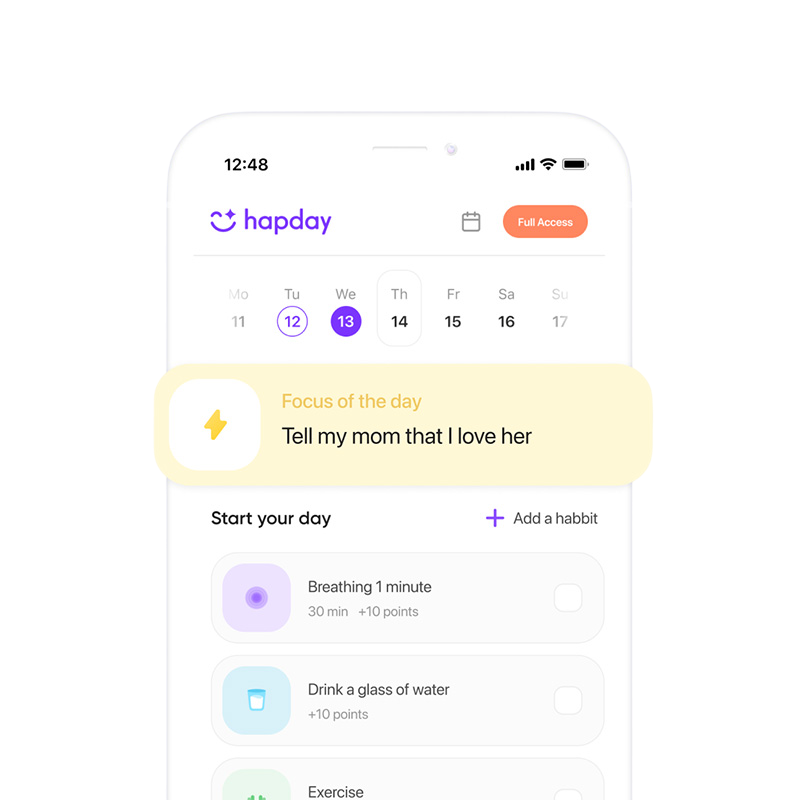
For guided programs, daily tools, and compassionate community, try hapday.me — a wellness platform for real-world healing. https://hapday.me/
References
- Centers for Disease Control and Prevention (CDC): Adverse Childhood Experiences (ACEs) Fast Facts
- National Institute of Mental Health (NIMH): Post-Traumatic Stress Disorder (PTSD)
- National Institute of Mental Health (NIMH): Coping with Traumatic Events
- Center on the Developing Child at Harvard University: Toxic Stress
- Center on the Developing Child at Harvard University: Resilience
- American Psychological Association (APA): Understanding Psychotherapy
- American Psychological Association (APA): PTSD Psychotherapy
- National Center for Complementary and Integrative Health (NCCIH/NIH): Mindfulness: What You Need to Know
- Mayo Clinic: PTSD — Symptoms and Causes
- American Psychological Association (APA): Writing to heal
- National Heart, Lung, and Blood Institute (NHLBI/NIH): Sleep Deprivation and Deficiency
- Harvard Health Publishing: Try self-compassion
- Harvard Health Publishing: Building your resilience