



Table of Contents
- Introduction
- What Your ACE Score Really Measures (And What It Doesn’t)
- The Science of ACEs: How Early Adversity Echoes in Adulthood
- How to Use Your ACE as a Map, Not a Sentence
- Regulate First: Calming a Sensitized Nervous System
- Therapies That Change the Story Your Body Tells
- Body-Based and Mindfulness Practices That Complement Therapy
- Let Relationships Do What Relationships Do: Heal
- Lifestyle Levers That Matter When ACEs Are High
- When Your ACE Score Doesn’t Match Your Pain
- A Practical Way to Personalize Recovery Based on ACE Load
- Measuring Progress Without Obsessing Over Perfection
- Safety Notes You Deserve to Hear
- Why This Works—The Long Arc of Hope
- The Bottom Line
- Summary + Next Step
- References
Key Takeaways
- ACE scores reflect early load on your developing system; they inform care, not destiny.
- Recovery is realistic through nervous system regulation, evidence-based therapy, and supportive relationships.
- Dose matters—higher ACEs raise risk—but plasticity means the brain and body can change.
- Personalize your plan by ACE load, current symptoms, and practical supports.
- Measure small, steady wins; healing is often incremental before it’s dramatic.
Introduction
You remember the night you first took the ACE questionnaire. Past midnight; the screen too bright, your breath tight. Ten questions. Yes or no. You counted your ACE score and froze, as if that number could hand down a sentence. Recovery—was it even realistic when the past felt welded to your chest?
Here’s the harder, kinder truth: Why Your ACE Impacts Childhood Trauma Recovery isn’t because a tally defines you. It’s because those early experiences leave signatures—on your nervous system, your stress reflexes, your expectations of love and danger. Once you grasp how ACEs shape the body and story, you can work with both. That’s the most hopeful part, in my view.
What Your ACE Score Really Measures (And What It Doesn’t)
The ACE (Adverse Childhood Experiences) score sums exposure before 18 to ten categories: physical, emotional, or sexual abuse; physical or emotional neglect; and household challenges such as caregiver mental illness, substance use, incarceration, domestic violence, or separation/divorce. Not a strength test. Not a diagnosis. A snapshot of load—what your young system had to carry, often in silence.
The CDC has tracked ACEs since the landmark 1998 CDC–Kaiser study. Their more recent summaries note that roughly 61% of U.S. adults report at least one ACE, and about 1 in 6 report four or more. As scores rise, so do risks for depression, anxiety, substance use, heart disease, and suicidality—dose and response moving in step (CDC). That’s the spine of Why Your ACE Impacts Childhood Trauma Recovery: the number approximates how many times your developing brain and body braced for impact.
“ACE scores don’t tell your future. They tell the story of load. Recovery is about redistributing that load—through safety, skills, and supportive relationships—so your nervous system isn’t carrying it alone.”
— Dr. Sarah Chen, Clinical Psychologist, NYU
The Science of ACEs: How Early Adversity Echoes in Adulthood
- Your stress response learns what “normal” is. Repeated adversity can hold the HPA axis at high alert. The Harvard Center on the Developing Child calls this “toxic stress” when severe, frequent, and unsupported by a stable caregiver. Over time it can sculpt brain architecture, immune function, even the ease with which you settle after a jolt. In practice, that might look like jumping at every email ping.
- Dose matters. CDC data show a stepwise climb in health risks as ACEs accumulate. More ACEs correlate with higher odds of mental health challenges, chronic illness, and health-harming coping. It isn’t destiny—probability tilting under the weight of accumulated stress. Personally, I think probability is useful only if it points us to targeted care, not fatalism.
- Trauma hijacks attention and memory. The amygdala gets vigilant; the prefrontal cortex struggles with planning or impulse brakes when you’re flooded; the hippocampus has a harder time placing memories in context. No wonder you can feel trapped in yesterday even when the door is wide open.
“Your ACE score tells us how many fires your developing system had to fight. Recovery teaches the fire alarm to stop blaring at burnt toast.”
— Dr. Miguel Alvarez, Psychiatrist and Trauma Specialist
How to Use Your ACE as a Map, Not a Sentence
This is where the story shifts from “what happened” to “what helps.” Why Your ACE Impacts Childhood Trauma Recovery is that it points to levers you can actually pull—nervous system skills, evidence-based therapy, community, and daily choices that counter toxic stress. I’m biased toward pragmatism; insight without tools can feel cruel.
When Maya, 28, went through a divorce, the fallout shocked her. ACE score: 5. She’d never called herself “traumatized.” In therapy, she saw how the breakup jolted old circuits—abandonment, hypervigilance. With body regulation tools and targeted trauma therapy, she found steadier ground and later built a relationship where disagreement didn’t equal danger. A modest arc—yet unmistakable. Healing is often incremental before it’s dramatic.
Regulate First: Calming a Sensitized Nervous System
Why it works:
- With higher ACEs, the stress system tends to be hair-trigger. Supporting vagal tone and practicing body-based regulation reduces HPA overactivation and nudges the prefrontal cortex back online—so therapy and relationships feel safer to inhabit.
- The National Institute of Mental Health notes that stress-management strategies—breathing, movement, and sleep care—can reduce the physiological wear and tear of chronic stress. Regulation is the floorboards of recovery.
How to try it:
- Breath training anywhere: Try a 4–6 pattern (inhale 4, exhale 6) for 3–5 minutes, twice daily. Longer exhales cue the parasympathetic “rest and digest” system.
- Orient to the present: Name five things you see, four you feel, three you hear, two you smell, one you taste. Quick, concrete, grounding.
- Guard sleep like medicine: Consistent bed/wake times and a wind-down routine matter. Sleep debt magnifies reactivity more than we realize.
- Gentle movement most days: A brisk walk, yoga, or cycling 20–30 minutes can reduce anxiety and improve mood. The Mayo Clinic highlights exercise as a support for depression and anxiety, in part through endorphins and better sleep.
Therapies That Change the Story Your Body Tells
Why it works:
- Trauma-focused therapies help reconsolidate traumatic memories, update fear networks, and build containment and meaning-making skills. They change both narrative and physiology—two doors into the same room.
- The American Psychological Association’s PTSD guideline strongly recommends cognitive processing therapy (CPT), prolonged exposure (PE), and EMDR for trauma-related symptoms. Method plus genuine warmth beats method alone.
How to find a fit:
- With higher ACEs and intrusive memories, nightmares, or avoidance, ask potential therapists about CPT, PE, EMDR, or trauma-focused CBT. Evidence-based doesn’t have to mean sterile; look for rapport and rigor.
- For complex attachment wounds, add modalities with parts work or relational focus (e.g., IFS-informed therapy, schema therapy) alongside the above.
- If anxiety or depression dominate, consider combining therapy with medical support when appropriate. Primary care or psychiatry can discuss medications; NIMH offers accessible overviews of PTSD and depression treatments.
“Evidence-based trauma therapies aren’t about reliving pain; they’re about rewiring stuck patterns with safety, titration, and choice. Your body learns there’s an exit ramp.”
— Dr. Priya Natarajan, Trauma-Informed Family Physician
Body-Based and Mindfulness Practices That Complement Therapy
Why it works:
- Somatic practices interrupt trauma loops by adding new sensory–motor experiences of safety. Mindfulness dampens rumination and strengthens emotion regulation—both buffers against stress.
- The National Center for Complementary and Integrative Health summarizes evidence that mindfulness meditation can help with anxiety, stress, and sleep. The best programs meet the body where it is.
How to experiment:
- Try 5–10 minutes of mindful breathing or a body scan daily using a timer. If stillness feels edgy, pair mindfulness with movement: walking meditation or gentle stretching.
- Build a “micro-dose” menu: cool water on the face, two minutes of sunlight, a 30-second shake-out. Tiny resets compound.
Let Relationships Do What Relationships Do: Heal
Why it works:
- Safe connection rewires threat predictions. Co-regulation—being with someone whose nervous system is steady—teaches your body a new baseline. Harvard Health has linked social connection with better outcomes; a 2021 brief framed it as protective across the lifespan.
- Because ACEs often include relational injuries, repairing inside healthy relationships targets the original site of harm. This is the most tender, brave work of all.
How to practice:
- Name what you need: “I don’t need fixing; I need listening,” or “Could we pause and breathe together for 30 seconds?”
- Build layered support: one friend who “gets it,” one mentor, one peer group, one clinician. Spread the weight so no single tie has to hold everything.
- Set small boundaries early. Boundaries protect the energy recovery requires.
Lifestyle Levers That Matter When ACEs Are High
Why it works:
- The CDC notes that ACEs increase the likelihood of smoking, heavy drinking, and other health-harming behaviors. Lifestyle shifts can blunt biological vulnerability and prevent compounding risk.
- Nutrition, movement, and substance moderation reduce inflammation and stabilize mood. These are scaffolding, not “nice to haves.”
How to start:
- Alcohol honesty: Track how drinking affects sleep and anxiety for two weeks. Adjust with curiosity, not judgment.
- Food as steadiness: Aim for protein + fiber + healthy fat most meals to stabilize blood sugar; steadier energy supports steadier emotions.
- Sunlight and light hygiene: Morning light anchors circadian rhythm, improving sleep and mood. Set a five-minute morning rule—nonnegotiable.
When Your ACE Score Doesn’t Match Your Pain
Some people hold a “low” ACE score yet live with severe symptoms. Others carry high scores and feel numb. The ACE questionnaire misses plenty: community violence, racism, bullying, medical trauma, profound grief, forced migration, or having a caregiver with untreated trauma. It also can’t count buffers—like the aunt who showed up every weekend or a teacher who spotted your talent and named it.
Jordan, 33, had an ACE of 1 but struggled with panic after years of racial harassment at school and a chaotic, high-pressure home. Naming what the ACE didn’t count helped him seek the right therapy and workplace accommodations. He stopped gaslighting his own pain and started healing it. That kind of reframing is, in my opinion, an act of self-respect.
Your ACE is one data point. It’s an imperfect but useful signpost for Why Your ACE Impacts Childhood Trauma Recovery: not for comparing suffering, but for calibrating care.
A Practical Way to Personalize Recovery Based on ACE Load
- If your ACE score is 0–1 and you’re struggling: Look beyond the form. Consider other adversities and try brief, skills-focused therapy or coaching plus nervous system tools. Aim to widen your window of tolerance and strengthen daily routines. Start small—consistency beats intensity.
- If your ACE score is 2–3: Combine skills practice with targeted therapy. Prioritize sleep and regular movement. Create a written “flare plan” for triggers. One page, taped inside a cabinet works well.
- If your ACE score is 4+: Pace your healing. Choose a therapist trained in trauma modalities and secure basics: housing stability, safe relationships, regular meals, sleep. Expect progress to be real and sometimes nonlinear. On hard weeks, measure effort, not outcome.
Measuring Progress Without Obsessing Over Perfection
- Track signals that matter: time to settle after a trigger; number of good-enough sleep nights per week; moments you set a boundary or asked for help; days between flashbacks.
- Use compassionate baselines. Compare yourself to last month, not last year’s ideal.
- Celebrate “boring” wins: you ate breakfast; you declined plans you didn’t have energy for; you went to bed on time twice this week. This is recovery—quiet, repetitive, building its own momentum.
Safety Notes You Deserve to Hear
- If you’re experiencing thoughts of suicide or self-harm, or if you feel unsafe, seek immediate support. In the U.S., call or text 988 for 24/7 help or visit 988lifeline.org.
- If you’re in a relationship where you fear harm, you are not overreacting. Reach out to local resources or a trusted professional. Your safety counts first.
Why This Works—The Long Arc of Hope
The nervous system is plastic. Brains change with repeated experiences of safety and agency, well into adulthood. The Harvard Center on the Developing Child underscores that while toxic stress can alter development, supportive relationships and effective interventions promote resilience across a lifespan. That’s the engine beneath Why Your ACE Impacts Childhood Trauma Recovery: change is biologically possible. I’ve seen it in clinics and living rooms since 2009.
What your ACE score can’t tell you is how your story unfolds from here. It doesn’t measure the friend who will sit with you on the porch at 2 a.m., the therapist who names what you’ve carried without flinching, the day you notice your hands aren’t shaking after a hard conversation. It can’t see your future self—more resourced, more rooted, still tender but not defined by it.
If this sounds like the road you want, take the first doable step. Then another. Whisper this if it helps: My number is not my future. My body can learn safety. My life can be rebuilt.
And every day you practice, you’re teaching your system a new language—one where alarm isn’t the loudest voice, and where you get to author the next chapter of your healing.
The Bottom Line
Your ACE score reflects past load, not your limits. By pairing body-based regulation with proven therapies and steady, supportive relationships, you can quiet false alarms, widen your window of tolerance, and build a life that feels safer from the inside out. Start with the smallest step you can repeat—let tiny wins compound.
Summary + Next Step
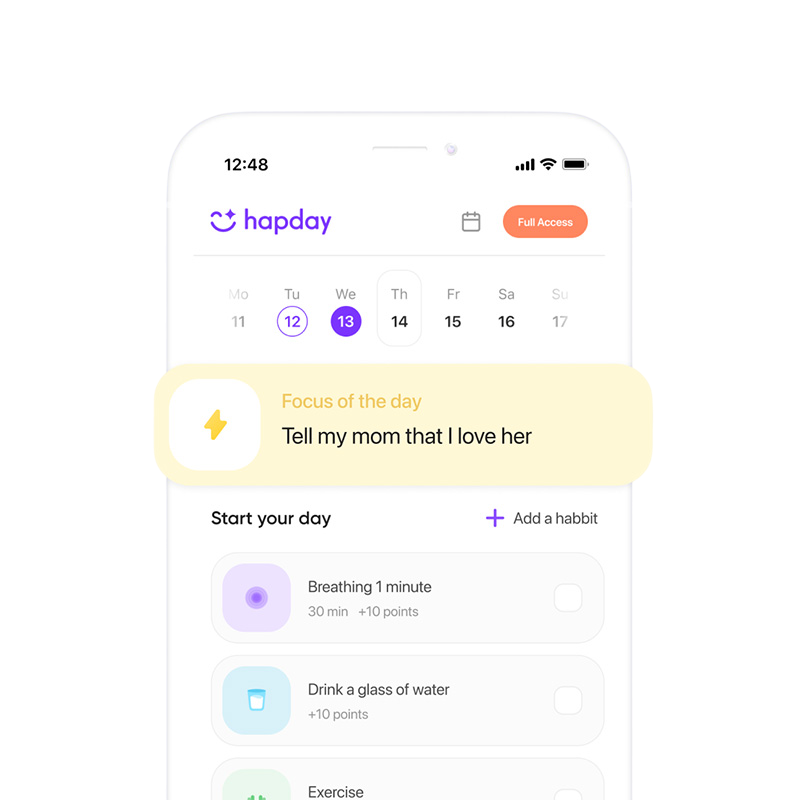
Your ACE score signals how early stress shaped your brain, body, and relationships—but it doesn’t lock your future. With nervous system skills, evidence-based therapy, and supportive connections, healing is realistic and measurable. If you’d like daily structure and guidance on this path, try guided programs at hapday.me. Bold the tiny wins. Let them multiply.
Explore support at https://hapday.me/
References
- Centers for Disease Control and Prevention (CDC) – Preventing Adverse Childhood Experiences (ACEs): Fast Facts
- Centers for Disease Control and Prevention (CDC) – About the CDC-Kaiser ACE Study
- Harvard Center on the Developing Child – Toxic Stress
- National Institute of Mental Health (NIMH) – 5 Things You Should Know About Stress
- National Institute of Mental Health (NIMH) – Post-Traumatic Stress Disorder
- American Psychological Association (APA) – Clinical Practice Guideline for the Treatment of PTSD
- National Center for Complementary and Integrative Health (NIH) – Meditation: In Depth
- Harvard Health Publishing – The health benefits of strong relationships
- Mayo Clinic – Depression and anxiety: Exercise eases symptoms
- Centers for Disease Control and Prevention (CDC) – Essentials for Childhood: Creating Safe, Stable, Nurturing Relationships and Environments