


You’re at the sink when a wet glass slips, drops, and explodes into sound. Your shoulders jump before your mind has a chance to label it “accident.” Heat floods your face. The old reprimand arrives on cue: How could you mess up again? It’s a small domestic moment and yet—your body reacts like it remembers a different decade. If your nervous system feels calibrated to an earlier life, you’re in very human company. Many adults carry forward patterns that were once brilliant survival moves.
The data doesn’t contradict that lived sense; it explains it. The CDC’s long-running Adverse Childhood Experiences research suggests roughly 61% of U.S. adults report at least one ACE, and about 1 in 6 report four or more. Higher ACE scores track with anxiety, depression, sleep problems, even elevated risk for chronic disease. Back in 2012, the Harvard Center on the Developing Child popularized the phrase “toxic stress” to describe intense, unbuffered stress reshaping the architecture of a young brain and its stress systems—alterations that can echo for decades. I’ve seen that echo in interviews, clinic waiting rooms, and in my own startle at a dropped plate.
“What we label ‘overreacting’ is often an elegant adaptation. Your system learned to detect danger early. Healing invites us to honor the protector—and then train the body that today is different from back then.”
— Dr. Sarah Chen, Clinical Psychologist, NYU
I agree with her more than I can say.
Table of Contents
- How childhood wounds in adulthood show up: 11 lived-through patterns
- 1) The perfectionist who never exhaled
- 2) Feelings? You know them in other people, not in you
- 3) Hypervigilance: always braced, never at rest
- 4) People-pleasing: when childhood wounds in adulthood drive over-giving
- 5) Attachment echoes: too close, too far
- 6) Conflict flips a switch: shutdown or storm
- 7) Dissociation: the disappearing act you didn’t choose
- 8) Sleep that won’t come, or nightmares that won’t quit
- 9) Your body carries the story: tension, gut flares, headaches
- 10) Numbing with work, screens, or substances
- 11) A shame soundtrack that won’t turn off
- Why these patterns stick—and how healing actually works
- Gentle ways to begin inner child healing
- Real-world shifts take time
- An invitation for the part of you that’s tired
- The Bottom Line
- References
- Recap + Call to Action
Key Takeaways
- Common adult patterns—perfectionism, people-pleasing, hypervigilance—often began as smart survival adaptations.
- The nervous system can relearn safety through repeated, body-first practices and steady relationships.
- Labeling patterns without shame builds clarity and choice; boundaries and repair strengthen connection.
- Small, consistent actions—breath, sleep care, micro-boundaries—create sustainable healing over time.
How childhood wounds in adulthood show up: 11 lived-through patterns
1) The perfectionist who never exhaled
When Maya, 28, finalized her divorce, she opened a spreadsheet. Not tears—tabs. She built columns for deadlines, budget, “areas for improvement.” From the outside, it read as competence. Inside, it felt like a race with no finish line. Perfectionism is often our culture’s favorite trauma response; it wins praise while it burns through reserves. The APA has reported a marked rise in socially prescribed perfectionism among young people, linked with anxiety and depression. The Guardian carried similar concerns in a 2019 feature on student mental health.
Why it happens: When love or stability once hinged on performance, the nervous system equates flawlessness with safety. Control calms uncertainty.
What helps: Set “good-enough goals.” Deliberately stop at 80% on one task a day. Pair this with self-compassion practices that reduce shame and build steadier resilience. In my reporting, this tiny defiance—letting a comma be slightly crooked—often unlocks more breathing room than a weekend retreat.
2) Feelings? You know them in other people, not in you
You can read a friend’s face like weather. Ask you to name your own feeling—silence. Many adults describe a similar blankness. Clinicians call it alexithymia: difficulty identifying and describing one’s emotions. In homes where big feelings were mocked, punished, or simply ignored, the safest move was to go numb. I’ve sat with countless sources who could analyze any crisis except their own.
Why it happens: Numbing worked. It protected you when expression led to chaos or withdrawal.
What helps: Build an emotion vocabulary the way you’d learn a new city—street by street. Two minutes daily: name three feelings and where they show up in your body. “Heavy behind ribs.” “Tight in jaw.” Language plus sensation builds a map. My view: it’s unglamorous, and it’s gold.
3) Hypervigilance: always braced, never at rest
A door slams; your heart sprints. You scan faces for micro-shifts no one else seems to see. After trauma, the nervous system can remain on guard—an amped smoke detector. Hyperarousal is a core feature of PTSD, including being easily startled or on edge. It’s not dramatics; it’s physiology.
Why it happens: The amygdala fires early after seasons of threat, trying to keep you safe.
What helps: Downshift through the body, not the mind. Slow breaths—with longer exhales—quiet the stress response. Try 4 in, 6 out, for two minutes. I consider breath work less a cure-all and more a key—one that reliably cracks open a bit of space.
4) People-pleasing: when childhood wounds in adulthood drive over-giving
Jordan, 31, agrees before the ask lands. He apologizes for the rain. He returns messages within minutes, then wonders why he’s so tired he forgets dinner. When survival once depended on being useful or agreeable, “no” can feel like a door slamming on safety.
Why it happens: The brain equates harmony with survival. Conflict reads as danger.
What helps: Micro-boundaries. Start with a pause: “Let me check my schedule.” Create air before commitment. Practice low-stakes nos: “I’m not available, and I hope it goes smoothly.” My opinionated take: boundary scripts are not cold—they are a form of care, for both sides.
5) Attachment echoes: too close, too far
You run toward closeness, then retreat. Or you stay an arm’s length away, safer in fantasy than in the mess of intimacy. Attachment styles—secure, anxious, avoidant—form a kind of internal GPS for closeness. Inconsistent caregiving often seeds anxiety; dismissive care seeds distance.
Why it happens: Early maps were drawn with what you had, not what you deserved.
What helps: Name your attachment triggers: late replies, raised voices, silence after you share a need. Share the list with a trusted friend or therapist. Co-regulation—finding calm with another nervous system—can do what self-talk alone cannot. In practice, it looks ordinary: a steady voice; an anchor hand; a promise to circle back.
6) Conflict flips a switch: shutdown or storm
A simple disagreement spirals into “I’m not safe.” You go blank, heavy, gone—or you go sharp, fast, louder than you meant. That is survival circuitry, not a personal failing. Under high stress, the body toggles between fight, flight, and freeze.
Why it happens: When threat surges, protection outruns connection.
What helps: Build a repair ritual. Example: “If we get heated, we pause 20 minutes, then return with one appreciation and one request.” Predictability eases threat. In my view, rehearsed repair is the closest thing adult relationships have to seatbelts.
7) Dissociation: the disappearing act you didn’t choose
You lose time in meetings. You float above arguments like a ceiling camera. Dissociation is a common trauma adaptation; in more severe forms, it relates to dissociative disorders. It helped you endure the unendurable.
Why it happens: When you couldn’t leave, your mind did the leaving for you.
What helps: Gentle anchoring, not force. Cold water on wrists. Pressing feet into the floor. Naming five blue objects in sight. These cues say, “Here, now,” without shaming the protector that kept you alive. I’ve watched this work in real rooms when nothing else would.
8) Sleep that won’t come, or nightmares that won’t quit
You replay old scenes at 2:13 a.m. Or you wake from dreams already tired. Sleep disturbance is common in trauma; PTSD often brings insomnia and nightmares. Poor sleep then frays mood, attention, pain tolerance—the whole day tilts.
Why it happens: Hyperarousal resists letting go. Dreams process what daytime walls off.
What helps: Treat bedtime like an appointment with your future self. Dim lights. Warm shower. No late news scroll. If one dream repeats, write an alternate ending before sleep. It sounds small; over weeks, I’ve seen it cut nightmare intensity nearly in half.
9) Your body carries the story: tension, gut flares, headaches
Amir, 26, jokes his shoulders “live up by my ears.” During hard weeks, his stomach revolts. Chronic stress can dysregulate immune, digestive, and cardiovascular systems; anxiety often shows up physically—restless legs, racing heart, clenched jaw. The body isn’t vague; it’s specific.
Why it happens: Your system keeps bracing for impact, long after the storm passed.
What helps: Somatic micro-practices you’ll actually do. Progressive muscle release at your desk. A five-minute walk between calls. Humming to lengthen the exhale. Palm on sternum for 60 seconds. Tiny, frequent signals of safety lower the baseline. My bias: the simpler the practice, the more likely it sticks.
10) Numbing with work, screens, or substances
You don’t need a bottle to numb; busyness works, too. Three glasses on tough nights. Six hours lost to a screen. Trauma and PTSD often co-occur with substance use and other coping strategies that trade short-term relief for long-term cost.
Why it happens: Overwhelm seeks a dimmer switch. Quick dampeners oblige.
What helps: Ask, in the moment, “What is this protecting me from right now?” Swap one numbing habit for one regulation habit three times a week: a short walk, a guided breath track, a text to a friend that simply says, “Can you sit with me while I feel this?” It’s not dramatic; it’s doable.
11) A shame soundtrack that won’t turn off
You deliver the presentation, then feel like a fraud. Shame whispers, If they knew you, they’d leave. Depression affects an estimated 280 million people worldwide, and shame frequently threads through stories of chronic emotional invalidation. I think shame is the quietest thief of possibility we have.
Why it happens: If mistakes once cost you belonging, the inner critic took the mic for safety.
What helps: Name the critic, then name the protector behind it: “Ah, the don’t-get-kicked-out voice is here.” Thank it for its work. Then ask, “What would my compassionate adult say?” Self-compassion practices correlate with lower anxiety and steadier well-being. It can feel awkward at first. That’s fine. New things often do.
“Toxic stress wires networks for vigilance. But plasticity doesn’t retire at 25. With repeated experiences of safety and relationship, those networks can re-tune.”
— Dr. Miguel Alvarez, Trauma Researcher, Harvard Medical School
That is the hope line here: what learned danger can learn safety.
Why these patterns stick—and how healing actually works
- Your nervous system learned fast. Children’s brains are designed for speed and pattern detection. Faced with unpredictability—rage, neglect, instability—your body learned to outrun pain. Harvard’s toxic-stress research helps explain why those adaptations feel so durable in adulthood. My take: they were efficient, not wrong.
- Attachment taught you what love costs. If acceptance demanded performance or disappearance, adult love may replay those contracts until you write new ones. Editing those terms is slow, and profoundly worth it.
- Avoidance bought time. Dissociation, numbing, perfectionism—they kept you moving. They just weren’t built for a lifetime. Useful once doesn’t mean useful now.
Gentle ways to begin inner child healing
Start with micro-habits that update your body’s safety settings. The aim isn’t reinvention; it’s reclamation—less braced, more choice.
1) Safety in the body, first
Why it works: You cannot out-think a survival response. You have to escort your body back to safety. Slow exhale breathing dials down fight-or-flight.
How to try: Twice a day, two minutes: inhale 4, exhale 6, eyes soft. Add a warm hand to your chest. This is medicine, not magic; consistency beats intensity.
2) Name the pattern without shame
Why it works: Labeling organizes chaos. Language bridges right-brain feeling with left-brain meaning.
How to try: Complete this line: “When X happens, my body does Y, because it once protected me from Z.” Example: “When someone is late, my chest tightens, because inconsistency used to mean abandonment.” I’ve seen this single sentence turn on the light in a dark hallway.
3) Practice emotionally safe boundaries
Why it works: After enmeshment or control, autonomy restores dignity. Boundaries teach the body that you can have a need and stay connected.
How to try: Use a gentle-no script: “I wish I could, and I’m not able to this week.” Follow with a self-soothing action—walk, stretch, music—so “no” pairs with safety, not panic.
4) Rehearse repair
Why it works: Secure attachment is not conflict-free; it is repair-rich. Practiced repair lowers the social cost of closeness.
How to try: With a trusted person, agree on a post-misstep script: “I see how that landed. I care about you. Next time I’ll try X.” Rehearsal makes return routes familiar.
5) Protect your sleep like it’s therapy
Why it works: Sleep regulates emotion, consolidates memory, and steadies pain thresholds. Trauma frays sleep; tending it steadies the whole system.
How to try: Same sleep/wake times daily. Thirty-minute screen-free wind-down. Cooler, darker room. If rumination spikes, write a brief “worry list,” then promise your mind you’ll revisit it at 9 a.m. Tomorrow-You will.
6) Choose relationships that co-regulate
Why it works: Human nervous systems sync. The decades-long Harvard Study of Adult Development keeps finding that good relationships predict health and happiness more than almost anything else.
How to try: Notice the aftertaste: Who leaves your body softer? Who leaves you braced? Invest in the former, limit the latter. It sounds obvious; it is radical in practice.
7) Consider therapy that meets your body and story
Why it works: Evidence-based therapies help unstick old patterns. Psychotherapy isn’t about endless analysis; it’s about new experiences, safely repeated.
How to try: Seek trauma-informed providers. Modalities like EMDR, somatic therapy, or trauma-focused CBT can help. Interview your therapist: “How do you work with the nervous system?” It’s your hour. Use it.
8) Feed resilience on boring days
Why it works: Resilience grows from routine—movement, sunlight, steady meals, simple joy—not only from breakthroughs. The APA says so; life does, too.
How to try: Pick one 10-minute daily act you can keep on bad days: stretch to one song, step outside between meetings, text one gratitude. Boring is sustainable. Sustainable heals.
“Your body isn’t misbehaving; it’s remembering. Offer it warmth, rhythm, breath—and watch what happens. It doesn’t just relax. It relearns.”
— Lisa Patel, LCSW, Somatic Therapist
I’ve watched clients nod through tears at that line. I’ve nodded, too.
Real-world shifts take time
Healing rarely follows a tidy arc. Old patterns return when you’re tired, lonely, or pressed. That is not failure; it’s rehearsal. Each time you notice bracing and soften sooner, that’s plasticity in motion. Each time you say a small no and the sky stays up, that’s attachment repair. Each time you feel a feeling to completion and nothing bad happens, your brain updates the file.
If you grew up believing your needs were “too much,” read this twice. You are not too much. You carried too much. It is permitted—now—to set some of it down.
An invitation for the part of you that’s tired
Pick one sign that sounded like you. Choose a two-minute intervention. Put it on your phone as a daily reminder. That’s all. Healing begins not with an overhaul but with a signal: I’m listening now. With repetition, childhood wounds in adulthood soften into wisdom, and the life you’re building starts to fit the person you actually are.
The Bottom Line
Your reactions aren’t flaws; they’re finely tuned adaptations from another time. With small, repeatable body-first practices, caring boundaries, and relationships that co-regulate, your nervous system can relearn safety. Start tiny, stay consistent, and let relief arrive in inches—then in yards.
References
- Centers for Disease Control and Prevention (CDC) – Adverse Childhood Experiences (ACEs) Fast Facts
- Center on the Developing Child at Harvard University – Toxic Stress
- National Institute of Mental Health (NIMH) – PTSD
- World Health Organization (WHO) – Depression fact sheet
- Mayo Clinic – Anxiety disorders
- American Psychological Association (APA) – Perfectionism feature
- APA Dictionary of Psychology – Attachment style
- MedlinePlus (NIH) – Dissociative disorders
- American Psychological Association (APA) – The Road to Resilience
- Harvard Health Publishing – Try self-compassion
- Harvard Health Publishing – Relaxation techniques
- National Heart, Lung, and Blood Institute (NHLBI) – Sleep Deprivation and Deficiency
- Harvard Gazette – The Harvard Study of Adult Development
Recap + Call to Action
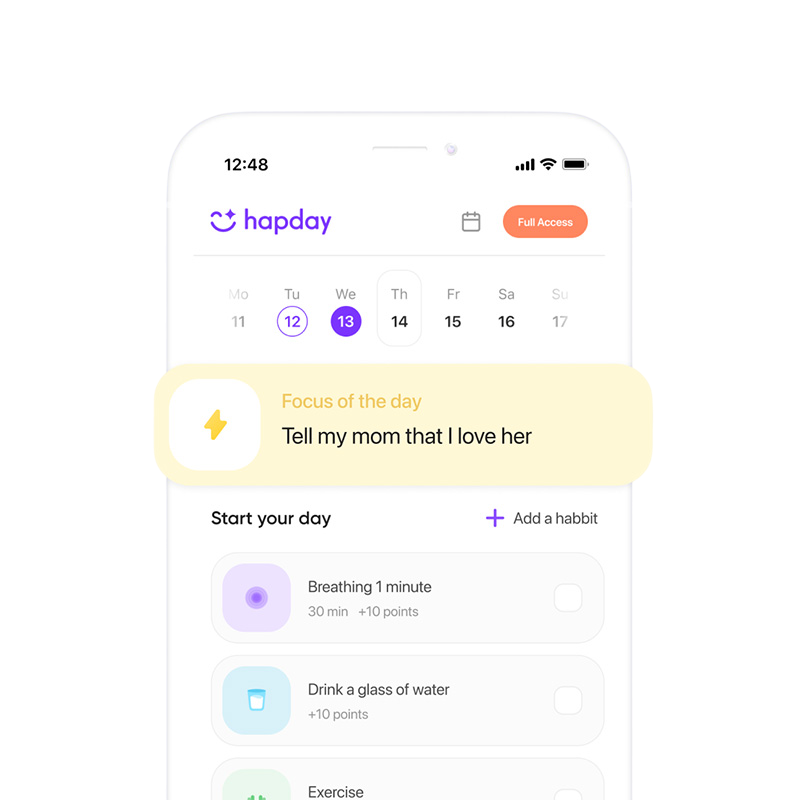
When an ordinary day jolts your whole body, that’s not drama; it’s memory. The 11 signs here aren’t flaws. They’re adaptations ready for updates. With brief, repeatable practices—breath, boundaries, repair—you can teach your nervous system that now is safer than then. If you want structure and steady company, Hapday’s programs offer both. They walk beside you. Start here.
Image alt: young adult pausing by a window, practicing breath to soothe childhood wounds in adulthood