


Introduction
You light a candle, open your journal, and write the sentence that always seems to arrive first: I thought I was past this. You’ve read the books, tried the meditations, cried on the bathroom floor more than once. And still, the same triggers loop back. The sting when your partner doesn’t text. Sunday-night dread. The voice that mutters, Be perfect or they’ll leave. If you’re asking why your inner child healing stalls right when life asks you to grow, you’re not alone. Stalling isn’t failure; it’s often your nervous system protecting you in the only way it learned.
Here’s what many of us were never told: healing from childhood trauma and emotional neglect is biological, relational, and—frustrating as it is—slow by design. It’s not just insight; it’s wiring. There are ordinary, repeatable reasons inner child work can feel stuck even when you’re doing everything “right.” I wish someone had told me that years ago, before I tried to muscle through.
Key Takeaways
- Stalling signals a safety mismatch, not failure—widen safety before you go deeper.
- Use micro‑doses of brave work paired with grounding to avoid flooding your system.
- Body basics—sleep, movement, breath—are the floor your healing stands on.
- Co‑regulation and healthy boundaries create the relational safety your inner child needs.
- Track “boring wins” to notice real progress: shorter triggers, kinder self‑talk, faster recovery.
What Science Says About Stuckness in Inner Child Healing
The science is both sobering and clarifying. The CDC estimates that roughly 61% of adults report at least one adverse childhood experience (ACE), and nearly 1 in 6 report four or more. Early adversity doesn’t only live in memory; it shapes stress responses, attention, and how we bond. Harvard’s Center on the Developing Child has long described how ongoing adversity can trigger “toxic stress,” a prolonged activation of the stress response that disrupts brain architecture and stress systems.
That’s why inner child healing is not linear. When life turns up the heat—a breakup, parenting, a career pivot—the same protective patterns surge. Hypervigilance. Numbing. People-pleasing. Shutdown. The National Institute of Mental Health notes that after trauma, overactive fear responses and avoidance can get entrenched. Effective treatments work by safely approaching, not bypassing, what once felt unbearable. Back in 2021, a wave of clinical reviews emphasized this graded, relational approach; in my view, it’s still the sanest lane on a crowded highway.
“Stalling usually signals a mismatch between the intensity of what you’re touching and the size of your safety net. The goal isn’t to push harder; it’s to widen your window of tolerance so the work can land.”
— Dr. Sarah Chen, PhD, Licensed Clinical Psychologist
Where Inner Child Healing Quietly Jams the Brakes
It’s not one thing. It’s a cluster of very human, very protective moves. If these feel familiar, that’s not proof you’re broken. It’s proof your early strategies were brilliant for survival—and now need updating.
-
You’re diving deep without enough safety on the surface
Think of healing like scuba diving. Depth is possible only when your oxygen line is solid. When Maya, 28, went through a divorce, she tried to process everything at once: journaling about childhood, nightly meditation, therapy twice a week. Within a month she felt brittle and numb. It wasn’t apathy; it was her body moving into protective shutdown. Harrowing emotions can spike arousal beyond your window of tolerance. Without quick-return anchors—breath, orienting, supportive contact—your system flips the breaker.
-
You’re doing a lot—but avoiding the thing that matters
Avoidance wears fancy clothes. It looks like mastering every resource except the one that scares you. Rewriting your morning routine instead of telling your partner you feel lonely. Organizing the closet instead of e‑mailing a therapist. The American Psychological Association notes that avoidance may offer short-term relief but tends to maintain stress and anxiety over time.
“Perfectionism and over-preparation can mimic progress. But if we never practice the vulnerable behavior—setting a boundary, asking for help—we’re rehearsing fear rather than repairing it.”
— Dr. Luis Romero, MD, Psychiatrist (Trauma Recovery)
-
You’re healing in your head, not in your body
Insight is beautiful—and limited. Many of us try to think our way out of feelings that began in the body. Without bottom-up practices to settle your physiology, insight can stir memories faster than your system can metabolize them. Sleep, movement, and breath aren’t “extras.” The National Institute of Neurological Disorders and Stroke explains that sleep strongly influences mood and emotional processing; poor sleep can intensify emotional reactivity.
-
You’re reaching for healing while still reenacting old dynamics
It’s almost impossible to grow while an active wound is being poked every day. If you’re still in relationships that mirror the original harm—chronic dismissal, volatility, manipulation—your system learns, again and again, that it isn’t safe.
-
You’re underestimating how much support you actually need
Solo healing is courageous. It’s also lonely. Trauma took root in relationships, and the most potent repairs often happen in relationships too. NIMH notes that trauma-focused psychotherapies are effective partly because they pair emotional activation with a safe, skilled guide.
“The work rarely stalls because people are lazy. It stalls because they’re carrying it alone. Co-regulation—another nervous system next to yours—can be the key that turns.”
— Lila Banerjee, LCSW, Trauma Therapist
-
You’re measuring progress with the wrong ruler
If your metric is “I never get triggered,” you’ll call normal human waves failure and pile shame on top of pain. Real trauma recovery looks like shorter episodes, faster returns to baseline, kinder self-talk during the storm, and braver choices afterward.
-
And then there’s life
New parenthood, grief, job stress—any big shift can pull energy away from inner child healing. This isn’t regression; it’s reprioritization. When capacity shrinks, your healing plan has to become kinder and smaller, not louder. A season of maintenance still counts.
The Biology Behind Safety-First Healing
When your early environment taught you that love was conditional or unpredictable, your nervous system learned to scan constantly. That vigilance once kept you safe. Today, it can block intimacy and rest. Inner child healing needs repeated experiences of safe‑enough contact to rewire those pathways. That’s not just poetry; it’s neuroplasticity. You’re teaching your body, over time, that the present is not the past.
How to do it:
- Build a daily “safety ritual” that precedes any deeper work. Try 2 minutes of orienting (name five things you see, four you feel, three you hear), 2 minutes of paced exhale breathing (inhale 4, exhale 6), and a 30‑second check-in: Can I feel the chair under me? If your body says no, that’s your work for today. The practice matters more than the plunge.
Slow Is Not Stuck—It’s Strategic Exposure
Your inner child doesn’t need your intensity; it needs your consistency. Healing tends to stall when we flood ourselves. Think micro‑dosing rather than marathons. Jordan, 33, a new parent, realized he could manage only five minutes of memory work before getting flooded. So he practiced five minutes, three times a week, always ending with a grounding song and a text to a friend. Within two months, he noticed less bracing around bedtime routines with his baby—his nervous system trusting that activation would end.
How to do it:
- Time‑capsule your work. Set a short timer for the “inside” part and a longer one for the “after” part. If you journal for 7 minutes, plan 10 minutes after to walk, shake out your arms, or make tea while looking out a window. The after is the healing—teaching your system the arc from activation to safety.
Tackling Avoidance in Humane, Doable Steps
Avoidance sticks because it works in the short term. You feel relief when you don’t send the scary text. Shift the game from avoid‑or‑suffer to dose‑and‑regulate.
“Make the brave behavior ridiculously small. Instead of ‘confront my boss,’ draft one sentence that names your need. That’s how we teach the brain, I can start and I can survive.”
— Dr. Luis Romero, MD, Psychiatrist (Trauma Recovery)
How to do it:
- Use “Start‑Stop‑Soften.” Start with one tiny action (open the e‑mail draft). Stop and notice sensations (butterflies, heat, jaw tightness). Soften with one regulating skill (longer exhale, feet on ground, hand on heart). Then decide if you can take the next tiny action. You’re building capacity, not proving toughness.
Body-First Repairs Fuel Brain-Based Insights
If you’re sleeping poorly, every tender conversation will feel sharper. The body is the backdrop for inner child healing. On ragged nights, even minor feedback can feel like a threat. On rested ones, it often doesn’t.
How to do it:
- Sleep: a consistent wake time, even on weekends.
- Move: 10 minutes of gentle movement daily (walk, stretch, sway).
- Nourish: stable, regular meals to avoid blood sugar dips that mimic anxiety.
Relational Repair Beats Solo Mastery
When Eli, 26, tried to “fix” his triggers alone, he’d have a good week, then crash. A small group he joined for trauma recovery changed the game—not because they unpacked every memory, but because they practiced being kind to one another under stress. He learned that when he stuttered or blanked, people stayed. That’s inner child healing in real time.
How to do it:
- Identify one safe‑enough person and one safe‑enough space. Safety doesn’t mean perfect. It means predictable, kind, and willing to repair. With that person, practice one relational skill at a time: “I’m noticing I’m shutting down right now; can we slow this?”
“Structured, skilled support helps people face and integrate what was once unbearable.”
— National Institute of Mental Health (Summary of trauma-focused psychotherapies)
Boundaries Are Love Letters to Your Younger Self
If you’re still regularly exposed to dismissive or chaotic behavior, your progress will sputter.
“The most profound reparenting move is often external—shifting who gets access to you and on what terms. Boundaries aren’t punishments; they’re promises to the child in you.”
— Lila Banerjee, LCSW, Trauma Therapist
How to do it:
- Draft boundary language that’s clear and kind: “I care about our relationship. I’m not available for comments about my body. If they continue, I’ll need to end the call.” Practice it aloud when you’re calm. You’re building a bridge between inner child work and outer safety.
Redefine Progress So Your Brain Can Notice It
If the only scoreboard is “no triggers,” your brain misses thousands of green shoots. Create a “boring wins” log. Did you notice a cue earlier? Name a need out loud? Take a bath instead of doomscroll? That’s your nervous system moving from threat to choice.
“Celebrate reps, not results. The reps are what rewire.”
— Dr. Sarah Chen, PhD, Licensed Clinical Psychologist
Your Sustainable Plan to Restart Inner Child Healing
Let’s gather this into a plan you can actually live with. Start with WHY each step works, then keep the HOW as small and repeatable as possible.
-
Safety-first rhythm (WHY: your body needs predictability to relax vigilance)
HOW: Anchor three touchpoints daily—a morning ground (2 minutes of breath + hot mug), a mid‑day pause (60 seconds to feel your feet), and an evening downshift (low lights, no problem‑solving after 9 p.m.). It’s modest on purpose.
-
Dose the depth (WHY: graded exposure teaches your brain you can handle more without flooding)
HOW: Pick one tender theme for two weeks—“How I learned to earn love.” Journal 7 minutes, three times a week. End each session with a sensory comfort (warm shower, scented lotion, favorite song).
-
Move from insight to action (WHY: new behavior, not new thoughts, updates threat predictions)
HOW: Translate every insight into a tiny behavior. Insight: “I apologize to avoid conflict.” Behavior: “In the next 48 hours, I’ll let one apology sit unsent for 10 minutes, breathe, and see what I actually want to say.”
-
Grow your co-regulation team (WHY: regulated others co‑regulate you; isolation keeps defenses high)
HOW: Schedule one standing support—weekly therapy, a trauma‑informed group, or a call with that one friend who “gets it.” Put it on autopilot so you don’t have to “feel brave” each time.
-
Fortify the body (WHY: sleep and movement lower baseline arousal so healing work doesn’t tip you over)
HOW: Commit to a consistent wake time and 10 minutes of movement most days. Track it for four weeks. Notice whether triggers resolve faster when your body’s resourced.
-
Update your relationships (WHY: current safety signals are the antidote to old danger cues)
HOW: Set one boundary you can keep. Pick the lowest‑hanging fruit to build trust with yourself. Keep it for two weeks. Reassess, then take the next step.
-
Track boring wins (WHY: your brain has a negativity bias; you need evidence of safety and progress)
HOW: Each night, list three small moments of regulation or courage. Reread on tough days.
A Closing Word for Your Younger Self
If your growth feels stalled, it’s not because you’re incapable. It’s because your system is wise. It learned to slam the brakes to keep you alive. Now, slowly, you’re teaching it when to let up. Inner child work is a long conversation between who you were and who you’re becoming. When you catch yourself thinking, Why is my inner child healing stalled again?, try this instead: I’m moving at the speed of safety. And safety, when repeated, becomes freedom.
About 60 seconds from now, you could take one tiny step—sip water, exhale longer, send that supportive text, or schedule the help you deserve. Your future self is already thanking you, even if its voice is a whisper.
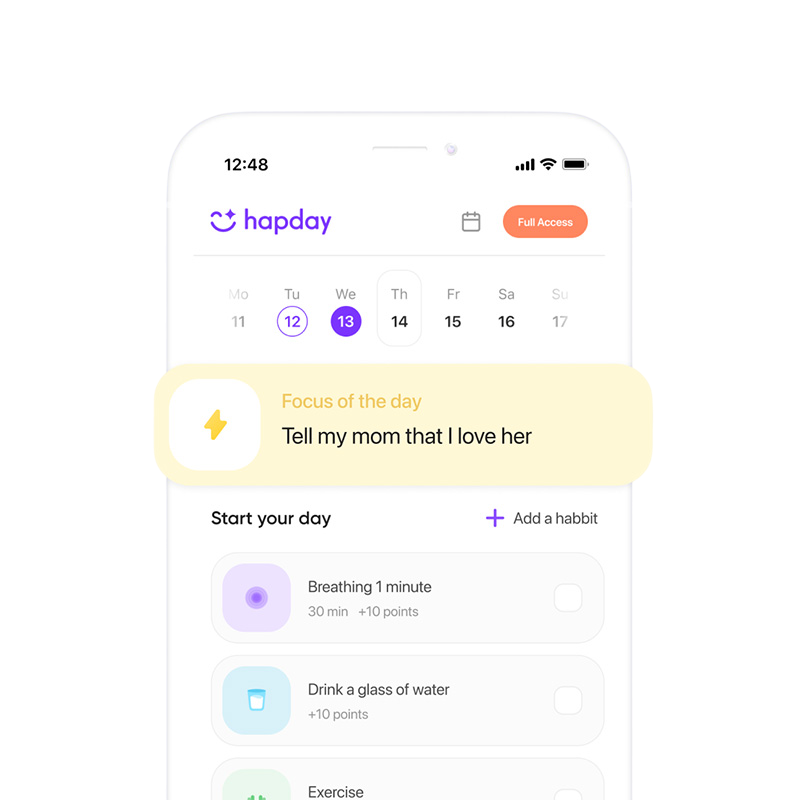
Want guided steps and daily support? Explore hapday.me for trauma‑informed programs, micro‑practices, and a community that gets it: https://hapday.me/
The Bottom Line
Stalling isn’t failure; it’s a safety strategy. Widen safety first, then dose deeper work. Build body resources, practice tiny brave behaviors, seek co‑regulation, and choose environments that stop arguing with your nervous system. Track “boring wins”—they’re the rewiring. You can restart inner child healing today, gently.
References
- Centers for Disease Control and Prevention (CDC)
- Harvard Center on the Developing Child
- National Institute of Mental Health (NIMH)
- American Psychological Association (APA)
- National Institute of Neurological Disorders and Stroke (NINDS)
- National Center for Complementary and Integrative Health (NCCIH) — Relaxation Techniques
- National Center for Complementary and Integrative Health (NCCIH) — Mindfulness
- World Health Organization (WHO)
- Mayo Clinic — Exercise and Depression