



Table of Contents
- Understanding Childhood Trauma and Its Adult Shadows
- The Subtle Tyranny of the Past
- The Role of Therapy and Professional Guidance
- Choosing the Right Therapeutic Path
- Self-Compassion and Developing New Narratives
- Building Healthy Relationships
- Nurturing Safe Social Networks
- The Power of Routine and Self-Care
- Crafting a Personalized Self-Care Regimen
- Meditation and Mindfulness: Tools for Healing
- Learning to Be Present
- Empowerment Through Creativity
- Looking Ahead: Transforming Wounds into Wisdom
Key Takeaways
- Childhood trauma can have lasting effects on adult mental and physical health.
- Therapy is crucial for understanding and reshaping unhealthy patterns from childhood.
- Self-compassion plays a vital role in the healing journey.
- Healthy relationships and social networks support recovery and personal growth.
- Incorporating routine, mindfulness, and creativity aids in emotional healing.
Understanding Childhood Trauma and Its Adult Shadows
Childhood trauma—it could take root in abuse, neglect, or intense emotional distress—leaves indelible psychological marks. The Centers for Disease Control and Prevention (CDC) notes that adverse childhood experiences, better known as ACEs, can have enduring effects on adult health, tying into chronic illnesses and mental challenges. The journey toward adult wellness from these origins is woven with complexity but is nonetheless navigable.
The Subtle Tyranny of the Past
Think about Maya, a 28-year-old graphic designer, who found herself face-to-face with her childhood’s lingering shadows after a rocky divorce. Raised in a household devoid of emotional warmth, Maya didn’t fully grasp until adulthood just how much these early dynamics had shaped her relationships.
“Realizing that I was drawn to emotionally unavailable partners because it felt familiar was transformative.”
— Maya, Graphic Designer
Her tale is far from exclusive. Adults often unconsciously replicate childhood patterns, unknowingly perpetuating cycles that might harm their well-being.
“Childhood trauma often traps us in unhealthy behaviors and beliefs. These spill into adulthood, affecting our self-perception and relationships.”
— Dr. Sarah Chen, Clinical Psychologist, NYU
Recognizing these patterns is a pivotal step in the healing journey, though it doesn’t stop there.
The Role of Therapy and Professional Guidance
Therapy can be a key player in unraveling the threads of childhood trauma. In the supportive confines of therapy, individuals can safely explore deep-seated fears and develop healthier coping strategies. Take Cognitive Behavioral Therapy (CBT), which the Mayo Clinic highlights as highly effective in addressing long-term trauma impacts by assisting individuals in reshaping negative thought patterns.
“Therapy isn’t just dredging up the past; it’s about reshaping your present reality, providing skills to revise narratives formed in childhood.”
— Dr. Max Williams, Harvard Medical School
Choosing the Right Therapeutic Path
Therapy decisions can feel overwhelming. CBT, EMDR (Eye Movement Desensitization and Reprocessing), or any other modality? The answer lies in what speaks to you and your particular struggles. For instance, EMDR has proven effective in processing traumatic experiences, often yielding relief where standard talk therapy might not.
Self-Compassion and Developing New Narratives
The journey of healing from childhood trauma leans heavily on self-compassion. This is crucial. The internal critic—a biting inner voice we often inherit from early emotional environments—chips away at our self-esteem.
“Self-compassion involves treating ourselves with kindness while acknowledging our shared humanity.”
— Dr. Kristin Neff, University of Texas at Austin
Silencing the critic isn’t about pretending it doesn’t exist but rather redirecting it with gentleness. This can be nurtured through practices like affirmations or mindfulness. Brene Brown, a well-known advocate of vulnerability, suggests embracing it to build resilience and transform our relationships with ourselves and others.
Building Healthy Relationships
Relationships are often where childhood trauma scars show most prominently. Understanding attachment styles—patterns founded in childhood by how our caregivers addressed our needs—can explain a lot. Are you anxious, avoidant, or more secure? Knowing this can guide you to conscious, healthier adult relationships.
In Maya’s case, identifying her pattern of pursuing unavailable partners led her to form safer boundaries and better communicate her needs. This, in turn, didn’t just better her love life; it also enriched her friendships and family ties.
Nurturing Safe Social Networks
Who you surround yourself with matters. Jim Rohn famously said, “You are the average of the five people you spend the most time with.” Deliberate about who enters your inner circle. Create bonds with those who honor your journey and support your growth, providing a safe space to practice vulnerability.
The Power of Routine and Self-Care
The strength of a stable routine in wellness should not be underestimated. Daily rituals—such as morning meditation, consistent exercise, or journaling—provide a supportive framework for mental health. The American Psychological Association (APA) highlights that regular physical activity, like a simple daily walk, plays a vital role in managing depression and anxiety symptoms.
Crafting a Personalized Self-Care Regimen
Putting together a self-care plan might require some tinkering. Begin small; perhaps a five-minute journaling session each morning or a brief walk in the evening. Consistency is the game-changer. Over time, these modest habits collectively augment your resilience.
Meditation and Mindfulness: Tools for Healing
Mindfulness and meditation offer powerful tools for healing. By focusing your awareness in the present, they lessen the hold of past trepidations.
“Mindfulness is a core transformation from living within a narrative to full engagement with reality.”
— Dr. Tara Brach, Psychologist and Meditation Teacher
Learning to Be Present
New to mindfulness? Start with the basics like breath awareness or guided meditations on platforms like Headspace. These practices promise more than clarity; they bolster emotional regulation and alleviate PTSD symptoms, which is something experienced by many dealing with trauma, according to the National Institutes of Health.
Empowerment Through Creativity
Creativity isn’t typically the go-to solution we think of, yet it offers an outlet for emotional release and self-discovery. Artistic endeavors—be it in art, music, or writing—can circumvent verbal barriers, giving us ways to process trauma differently.
Your Creative Outlet Awaits
Delve into different forms of creative expressions to find what resonates. Whether painting, writing poetry, or dancing moves you, letting your creativity flow can unveil significant insights and allow for emotional release.
Looking Ahead: Transforming Wounds into Wisdom
Healing from childhood trauma isn’t about erasing the past; it’s transforming it into reservoirs of strength. The resilience you nurture through these experiences equips you to thrive anew, adopting perspectives and behaviors that support your well-being.
As you move forward, remember the unique journey only you can take, interwoven with professional support, compassion, and the wholehearted embrace of healing practices. Embracing this expedition wherein every stride holds its healing promise is where the real transformation resides.
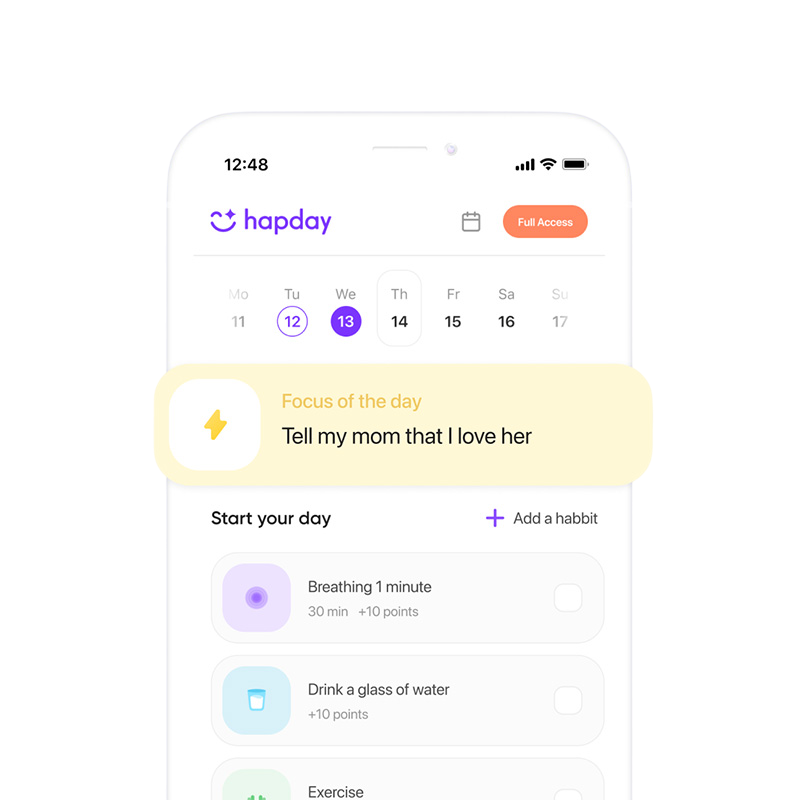
Seek out hapday.me, a platform for wellness that offers guided self-healing programs and unwavering daily support—standing by you to cultivate genuine, lasting change.
The Bottom Line
Embracing the journey of healing from childhood trauma involves recognizing the past, engaging with supportive therapy, practicing self-compassion, building healthy relationships, and integrating routines that foster well-being. Every step you take is significant in crafting a healthier reality.