



Introduction
The first time you notice the ache, it rarely announces itself. It slips in on an ordinary Tuesday: a tight chest when a friend cancels, a prickle of panic when your partner is five minutes late, an apology tumbling out when you’ve done nothing wrong. You sense it’s bigger than the moment, older than the room. Somewhere inside, a younger you is waiting to be met. For many people I’ve interviewed over the years, inner child healing starts exactly here—with a small thread of tenderness pulling you back to the places you went unheard, unseen, or unprotected. It’s not melodrama. It’s memory, alive in the body.
If this sounds familiar, you’re not broken. You’re noticing how the past can find its way into the present—how history echoes in our nervous systems and our relationships. And you’re ready to learn how to start inner child healing after trauma in a way that’s steady, compassionate, and grounded in evidence. That’s the only kind that lasts, in my view.
Table of Contents
Key Takeaways
- Inner child healing repairs unmet developmental needs with steady, compassionate practices grounded in neuroscience.
- Safety and pacing come first—build regulation skills and supportive settings before revisiting hard memories.
- Small, consistent rituals (reparenting, play, boundaries) are more impactful than grand gestures.
- Healing often happens in relationship; seek reciprocal connections and, when possible, trauma-informed therapy.
- Progress shows up as micro-shifts—catching triggers sooner, setting one boundary, or feeling a little more ease.
What Your Inner Child Is Actually Asking For
“Inner child” can sound soft-focus until you remember this: early experiences are stored in brain circuits that shape emotion, memory, and behavior. Inner child healing is, at heart, a practical attempt to mend unmet developmental needs—safety, attunement, boundaries, play—so your adult self has more freedom to choose.
“Think of the inner child as the part of your nervous system that learned how to survive. Inner child healing doesn’t erase the past. It teaches your nervous system there are new, safer options now.”
— Dr. Sarah Chen, Clinical Psychologist, NYU
Repair isn’t regression; it’s responsibility.
Why Inner Child Healing Helps Your Nervous System After Trauma
-
The science: Adverse Childhood Experiences (ACEs) are common. The CDC reports roughly 61% of adults have at least one ACE, and 1 in 6 have four or more. Higher ACE scores track with increased risk for mental and physical health problems across the lifespan.
-
What happens in the body: Without supportive buffering, chronic stress can reshape brain systems: a jumpy amygdala, fragmented hippocampal memory, and a taxed prefrontal cortex. Harvard’s Center on the Developing Child describes how “toxic stress” can disrupt brain architecture without reliable care.
-
Why it matters: Inner child work offers gentle, repeated corrective experiences—safe connection, self-kindness, sturdy limits. Over time, repetition nudges the brain toward new patterns via neuroplasticity.
“When people practice inner child healing, they’re essentially giving the brain a new playbook. Over time, the nervous system learns it doesn’t have to default to fight, flight, or fawn during everyday conflicts.”
— Dr. Marcus Reed, Psychiatrist, UCLA
Before You Begin: Safety, Pacing, and Boundaries
If you grew up scanning for danger, you’ve earned your vigilance. Build safety first—rushing helps no one.
- Set the pace: Learn your “window of tolerance”—activated but not flooded. Notice edges and pause early.
- Choose supportive settings: Quiet room, familiar blanket, soft light, or a trusted friend on standby.
- Build external care: Evidence-based therapies (trauma-focused CBT, EMDR) can reduce PTSD symptoms; inner child work can sit alongside therapy.
“Safety is not an affirmation. It’s a practice. Before we revisit hard memories, we teach the body how to come back to the present—through breath, grounding, and simple choices that say, ‘I’m in charge now.’”
— Jamila Ortiz, LCSW, Somatic Trauma Therapist
How to Start: Five Gentle Entry Points
This isn’t a checklist; it’s a menu. Choose one or two that feel doable this week.
-
1) Learn your inner child’s “language” through sensations and triggers
Why it works: The body speaks before words. Signals like heat, a clenched jaw, or the urge to disappear map old threat patterns so you can respond instead of react.
How to try it:
- Keep a tiny “trigger map.” Note the situation, body sensations, emotions, and the story that arrives (e.g., “I’m in trouble”). Watch for patterns.
- Pair mapping with grounding: press feet into the floor, name five things you see, place a hand on your heart.
Mini case: When Maya, 28, received a late-night text from her ex, mapping revealed a stomach drop and a theme: “When the adults fight, I’m unsafe.” Naming it let her pause and choose to wait until morning. That pause is progress.
-
2) Write to and from your younger self
Why it works: Narrative knits memory, engaging the prefrontal cortex and soothing limbic alarm. Self-compassion correlates with lower anxiety and greater resilience.
How to try it:
- The compassionate letter: Pick an age (7, 12, 16). Write: “Here’s what happened. Here’s what you deserved. Here’s what I’ll do for you now.”
- The reply: Switch pen or typeface and let the younger part answer. Notice needs (comfort, protection, permission to play).
-
3) Reparenting yourself in small, consistent rituals
Why it works: Consistency rewires. The inner child learns from what you do daily, not grand promises.
How to try it:
- Morning check-in: “How old do I feel today?” If younger, soften the day—protect a break, plan a warm breakfast, allow a “no.”
- Boundaries as care: Practice one kind boundary a week. Expect discomfort; it signals growth.
- Five minutes of play: Draw badly, dance for one song, toss a ball for your dog.
Pro Tip: Stack reparenting cues onto routines: after brushing teeth, place a hand on your heart and say, “I’ve got you.” Set a gentle phone reminder if needed. -
4) Repairing attachment in real time
Why it works: Trauma often happens in relationship; healing does too. “Earned secure” bonds let you be seen, mess up, and repair.
How to try it:
- Name repair moments: “I was stressed and took it out on you. I care about this relationship.” Track how it lands.
- Choose reciprocal spaces: Support groups, mentorships, and trauma-informed communities offer reliable presence.
-
5) Seek therapeutic support that integrates inner child work
Why it works: Skilled guidance prevents retraumatization and can accelerate growth. Modalities that often map well:
- Trauma-focused CBT: targets thoughts and behaviors tied to trauma.
- EMDR: helps process stuck memories so they’re less triggering.
- Parts-informed therapies (e.g., IFS): respectfully engage “younger parts.”
There is strong evidence for trauma-focused psychotherapies in PTSD. When interviewing therapists, ask about attachment, self-compassion, and pacing. Fit matters more than trend.
“Good inner child work is collaborative. Your therapist shouldn’t bulldoze you into memories. They should help you build skills to feel safe now, and visit the past only when you have enough inner and outer support.”
— Dr. Sarah Chen, Clinical Psychologist, NYU
Image: adult offering a warm blanket to their younger self—inner child healing in a calm, sunlit room
What If Your Family Says “It Wasn’t That Bad”?
You may hear minimization or be labeled “too sensitive.” Impact depends on timing, duration, and support. Even without a headline-making event, chronic emotional neglect can act like toxic stress without buffering care.
When Luis, 31, told his father he felt lonely as a kid, his dad scoffed: “You had a roof over your head.” Instead of fighting to be believed, Luis shifted to reparenting himself—limiting holiday contact, joining a weekly basketball group, and writing his inner 10-year-old the words he never heard: “Your feelings are real. I’m with you.” Sometimes, investing in repair is wiser than winning a debate.
If you’re wondering, “Am I making this up?”—you’re not alone. Doubt is common after gaslighting or years of invalidation. Anchoring to data can steady you: the CDC’s ACE research and APA treatment guidelines exist because many people live with and heal from trauma.
Make Room for Grief, Not Just Grit
Grief is part of inner child healing—the grief of what you didn’t get, the milestones shaped by survival, the years spent bracing. Letting grief move can feel destabilizing, but it’s a sign of thawing, not failing.
Try a simple ritual:
- Create a small “then and now” altar: a pebble from your childhood park, a photo of you at 8, and today’s house key.
- Light a candle once a week and name one thing you survived and one thing you’re choosing now.
How to Know You’re Making Progress (Even When It’s Messy)
Healing rarely travels in straight lines. Look for micro-shifts:
- You catch a trigger ten seconds sooner and take a breath.
- You text a boundary and survive the inner cringe.
- You notice a sliver of ease where panic used to sit.
Mindfulness and self-compassion support these shifts by strengthening regulation and easing harsh self-criticism. Keep a “proof of change” note in your phone. When shame says “Nothing’s different,” read your receipts.
What About Setbacks?
Setbacks happen: a tough week, a family event, a news headline—old patterns flare. Try a three-part reset:
- Normalize: “My nervous system is doing what it learned. This makes sense.”
- Nurture: Do one reparenting act—eat, nap, call a safe person, or step outside.
- Name one tiny next step: Two minutes of breathwork, one journal line, one boundary.
“Relapse into old coping is not a moral failure; it’s a stress signal. Respond with care, not punishment.”
— Dr. Marcus Reed, Psychiatrist, UCLA
Starting Where You Are If Therapy Feels Out of Reach
- Education: Reputable resources validate your experience and teach skills (national institutes, clinical associations).
- Daily regulation: Pair meals with three slow breaths; pair bedtime with one self-compassion sentence.
- Community care: Peer-led groups, moderated online spaces, and wellness platforms with structured practices can guide you between (or before) sessions.
A Quick Way to Fold Practices Into a Busy Life
“Habit stacking” makes care practical:
- After your morning coffee, put one hand on your heart and say, “I’m here.”
- After you shut your laptop, step outside and name three colors you see.
- When you wash your face at night, imagine washing worry off younger you, too.
If Your Trauma Involved Neglect, Not Abuse
Emotional neglect is defined by absence and can be harder to name. Inner child work emphasizes:
- Learning the sensations of “yes” and “no.”
- Practicing asking for help with low-stakes requests.
- Building a menu of comfort that doesn’t require performance.
“We’re teaching bodies that are used to earning care that care can be given freely.”
— Jamila Ortiz, LCSW, Somatic Trauma Therapist
When to Seek Extra Support Right Now
Consider professional support if:
- You have persistent nightmares or flashbacks disrupting daily life.
- You feel numb or detached for long stretches.
- You’re using substances or self-harm to cope.
- Your relationships feel unsafe or violent.
If you’re in immediate danger, contact local emergency services or a crisis line in your country. In the U.S., dial or text 988 for the Suicide & Crisis Lifeline.
What You Deserve to Know as You Begin
- You did not cause your early pain. Your survival strategies were brilliant in context.
- Your brain can change. Neuroplasticity remains possible across the lifespan.
- You don’t have to heal alone. Co-regulation with safe people is medicine.
- Inner child healing after trauma is not childish—it’s courageous adult work.
- Play, rest, and joy are part of the medicine from day one.
A Closing Note to the Younger You
If no one told you, hear it now: You were worthy of care then; you are worthy now. As you practice inner child healing after trauma, you’re not pretending the past was different. You’re choosing to be different to yourself in the present—so your future can be freer than your history.
Summary and Next Step
Starting inner child healing after trauma is about safety, steady practices, and compassionate connection—supported by science on stress, attachment, and neuroplasticity. Small daily rituals, mindful awareness, and, when possible, evidence-based therapy help you reparent yourself with the care you always deserved. You don’t have to do this alone.
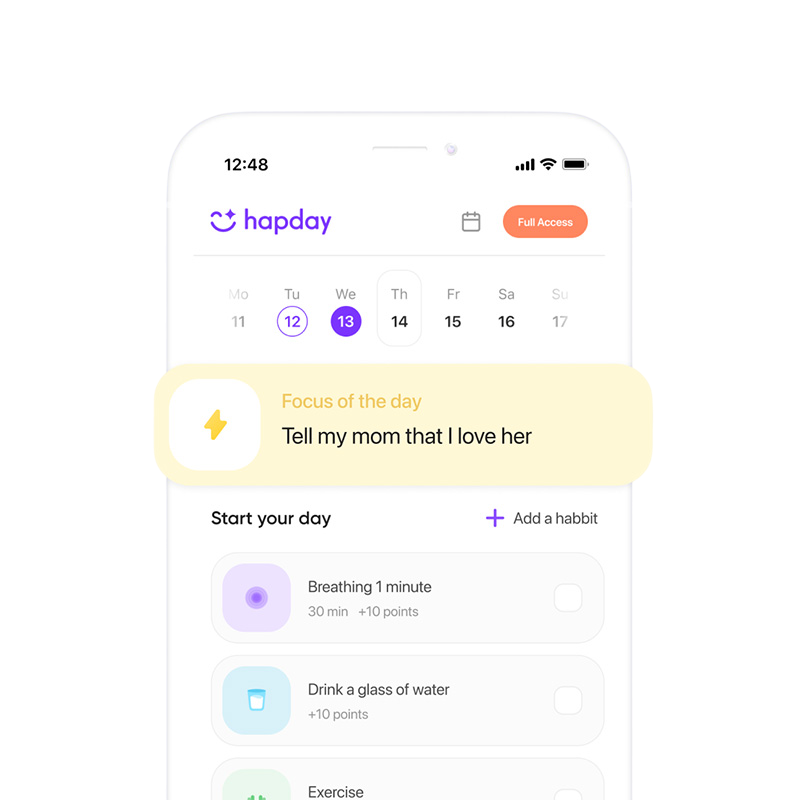
For guided practices, coaching prompts, and daily community support, try hapday.me: https://hapday.me/. Build your inner child healing routine with structure and heart.
The Bottom Line
You are not broken—your nervous system adapted to survive. With safety, kindness, and consistent practice, you can teach it new options. Start small, go gently, and let connection help you carry the load.
References
- Centers for Disease Control and Prevention (CDC) — Adverse Childhood Experiences (ACEs) Fast Facts: https://www.cdc.gov/violenceprevention/aces/fastfact.html
- Harvard University, Center on the Developing Child — Toxic Stress: https://developingchild.harvard.edu/science/key-concepts/toxic-stress/
- American Psychological Association (APA) — PTSD Treatments That Work: https://www.apa.org/ptsd-guideline/patients-and-families/overview
- National Center for Complementary and Integrative Health (NCCIH) — Mindfulness Meditation: https://www.nccih.nih.gov/health/mindfulness-meditation-what-you-need-to-know
- National Institute of Mental Health (NIMH) — Post-Traumatic Stress Disorder (PTSD): https://www.nimh.nih.gov/health/topics/post-traumatic-stress-disorder-ptsd
- American Psychological Association (APA) — The Power of Self-Compassion: https://www.apa.org/monitor/2012/07-08/self-compassion