



The first time you say no as an adult can feel like a small betrayal. Your voice wobbles; the air thins. Somewhere younger inside, a part of you panics: Will they be mad? Will they leave? If you grew up needing to be agreeable, invisible, unfailingly helpful, a boundary can feel like breaking a family rule written in invisible ink. This is where inner child healing becomes more than a self-help trend—it’s a corrective experience. It doesn’t hand you a script; it repairs the part of you that learned to shrink to stay safe. In my view, this is the difference between white-knuckling a limit and actually resting inside one.
Table of Contents
- What Inner Child Healing Really Means (and Why It Changes Boundaries)
- Why Saying No Feels So Dangerous When You Grew Up Without It
- How Inner Child Healing to Set Boundaries Works
- Step 1 — Map Your Boundary Story With Curiosity
- Step 2 — Practice Self-Compassion to Reparent the Part That’s Afraid
- Step 3 — Regulate Your Nervous System Before You Speak
- Step 4 — Use Assertive Language That Honors You and the Relationship
- Step 5 — Start With Micro-Boundaries and Build Tolerance
- Step 6 — Repair Gently When Needed
- Scripts and Scenarios: Inner Child Healing to Set Boundaries at Home, Work, and with Family
- At Home
- At Work
- With Family
- What If You Freeze, People-Please, or Backtrack?
- Healing the Guilt That Comes With Boundaries
- When Loved Ones Don’t Like Your Boundaries
- A Compassionate Boundary Toolkit You Can Start Today
- The Heart of It
- The Bottom Line
- About the Author’s Experts
- Key Sources for Your Toolbox
- About InnerRoots
- Summary and Next Step
Key Takeaways
- Inner child healing builds internal safety so boundaries feel like care, not danger.
- Soothe first, then speak: regulate your nervous system before asserting limits.
- Use clear, concise, respectful language—overexplaining weakens boundaries.
- Start with micro-boundaries to retrain your body that saying no is safe.
- Repair and consistency teach your younger parts that relationships can hold honesty.
What Inner Child Healing Really Means (and Why It Changes Boundaries)
Inner child healing isn’t about playacting your childhood. It’s the practice of recognizing the younger parts of you that learned survival rules—don’t upset anyone, apologize first, don’t need—and offering them the care they didn’t receive then. Boundaries are the adult expression of that safety. When you tend the frightened, overgiving, hypervigilant parts within, you stop abandoning yourself to keep the peace. I’ve sat with countless readers who tell me the same thing: the boundary finally “took” when their body believed it was allowed.
You’re not imagining the link between childhood and boundary trouble. The CDC notes that roughly 61% of adults have lived through at least one adverse childhood experience (ACE), and 1 in 6 have had four or more—abuse, neglect, household chaos that shape stress responses across a lifetime (CDC). Harvard’s Center on the Developing Child has long described how repeated, unbuffered stress—“toxic stress”—alters brain architecture and stress-response systems, making it harder to feel safe enough to say no or trust that limits won’t cause harm (Harvard University). Back in 2021, several newsrooms, including The Guardian, reported the surge in burnout and the awkward workplace renegotiations that followed; boundaries became dinner-table talk for the first time in years.
“Boundaries are not about pushing people away. They are about restoring a sense of protection your nervous system didn’t consistently get. When that younger you feels safer, asserting a limit stops feeling like a threat and starts feeling like care.”
— Dr. Lila Gomez, Licensed Clinical Psychologist (Developmental Trauma Specialist)
Her point is simple and, I think, exactly right.
Why Saying No Feels So Dangerous When You Grew Up Without It
If you were the peacemaker, the helper, or the quiet one—if it was easier to swallow the no—your body likely learned to equate agreement with safety. That isn’t weakness; it’s adaptation. And it worked, until it didn’t.
- If your no was ignored, mocked, or punished, your brain filed “no” under danger.
- If you became the emotional adult as a child—caring for siblings, managing a volatile parent—your worth may have felt tied to being endlessly available.
- If you were emotionally neglected, you may never have seen clear, respectful limits modeled at home.
“When early relationships required you to tune to everyone else, your internal boundaries blur. Inner child work brings that younger you back into the room so you can ask, What did I need then? What do I need now? That’s the blueprint for healthy limits.”
— Dr. Evan Rhodes, Trauma Therapist and Relational Healing Advocate
The science tracks with our lived reality. Chronic early stress sensitizes the stress systems, so ordinary conflict or disappointment can trigger outsized fear, even when you’re safe (Harvard University). That’s why a simple boundary can feel like cliff-jumping. The good news is unsensational but powerful: nervous systems learn. With inner child healing, you build safety inside first, then carry your limits into the world in a way that actually sticks.
Case stories make it real:
- Maya, 28, finalized a divorce, yet was still functionally parenting her ex—paying his bills “so he wouldn’t spiral,” saying yes to last‑minute favors. After a month of inner child journaling and daily self-compassion phrases, she sent her first clear text: “I can’t send money, and I trust you to find the support you need.” She cried, shook, and then noticed her chest soften for the first time in weeks. My read: that wasn’t just a text; it was a nervous system milestone.
- Jordan, 32, grew up the calm one in a chaotic home. At the office, that translated into fixing colleagues’ projects and answering emails at midnight. After learning a few regulation skills, he practiced a micro-boundary: “I won’t be checking email after 6 p.m.” Week one, his palms sweated nightly. By week three, he felt pride rather than panic. That turn from dread to steadiness is, in essence, the work.
How Inner Child Healing to Set Boundaries Works
Before the “how,” a quick “why.” Assertiveness—the skill of communicating needs with respect—is linked to lower stress and better relationships (Mayo Clinic). When you pair assertiveness with inner child healing, you address the root: the younger parts of you that believe asking is unsafe. You soothe the alarm first; then you speak the limit. It’s a two-step that feels gentler on the body and far more sustainable. In practice, I’ve seen it beat willpower every time.
“So many adults try to set boundaries from the neck up—perfect scripts, zero vulnerability. But your nervous system calls the shots. If your inner child is terrified, your voice will apologize, minimize, or collapse. Soothe them first. Your yes and no will come out clear.”
— Dr. Priya Shah, Psychiatrist (Trauma & Attachment)
Here’s a compassionate, evidence-informed process you can practice.
Step 1 — Map Your Boundary Story With Curiosity
Why it works: We make sense of ourselves through stories. When you trace how your no was treated growing up, you surface the rules you still obey. Naming those patterns helps your brain update them. You’re making your experience coherent—an essential piece of trauma recovery. I believe this narrative work is underrated; it’s the scaffolding that holds new behavior.
How to do it:
- Journal prompts: When did saying no get me in trouble? Whose disappointment scares me most? What did I have to be to keep love?
- Write a short “script” from your inner child: “I learned that if I…” Read it out loud; notice where your body tightens, what memories flicker. That feeling is the part that needs care before you set any external limits.
Step 2 — Practice Self-Compassion to Reparent the Part That’s Afraid
Why it works: Self-compassion is not coddling; it’s an evidence-based way to reduce anxiety and shame and to increase resilience. Harvard Health reviews research linking self-compassion with lower stress, anxiety, and depression—and with healthier motivation (Harvard Health Publishing). In my experience, without self-compassion, boundaries calcify into rigidity; with it, they become humane.
How to do it:
- Place a hand on your heart and say, “Of course this is hard. A younger me learned it wasn’t safe to need things. I’m with you.” Use a warm tone; your nervous system hears tone more than words.
- Create a “reparenting” phrase for tough moments: “I will not abandon you to keep the peace.” Repeat it when the urge to overexplain spikes.
Step 3 — Regulate Your Nervous System Before You Speak
Why it works: When your stress response is high, your prefrontal cortex—the part that plans and forms words—goes partly offline. Mindfulness practices reduce stress reactivity and improve emotion regulation (NCCIH). My bias: no script beats a settled breath.
How to do it:
- Try the 4‑6 breath: Inhale through your nose for 4, exhale for 6. Do 6 rounds. Longer exhales cue safety.
- Orient: Look around and count five blue objects. Naming the present reminds your body you’re not back there.
- Decide: Will I set this boundary now, later, or in writing? Choosing timing is a boundary too.
Step 4 — Use Assertive Language That Honors You and the Relationship
Why it works: Assertive communication respects both parties. The Mayo Clinic notes it lowers stress, strengthens self-esteem, and reduces conflict (Mayo Clinic). In my newsroom brain, brevity is kindness—especially under stress.
How to do it:
- Simple boundary scripts:
- “I’m not able to take that on.”
- “I need 24 hours to think before deciding.”
- “Please don’t comment on my body.”
- “I won’t discuss this when voices are raised. We can talk later.”
- Keep it short. Boundaries wobble when we overexplain.
- Expect feelings—yours and theirs. Feelings aren’t emergencies.
Step 5 — Start With Micro-Boundaries and Build Tolerance
Why it works: Your nervous system learns through repeated, tolerable practice. Micro-boundaries—small limits with manageable risk—teach your inner child that nothing catastrophic happens when you protect your energy. I find small wins are the most honest motivators.
How to do it:
- Practice with low-stakes situations: “No thanks” to a refill; “I’ll get back to you tomorrow” to a coworker.
- Celebrate every rep. Track it: “I respected my time for 10 minutes today.” Reinforcement builds new pathways.
Step 6 — Repair Gently When Needed
Why it works: Boundaries can create friction. Repair—the intentional reconnection after a misunderstanding—teaches your inner child that relationships can hold honesty without breaking. Personally, I see repair as the quiet proof that boundaries are pro-relationship, not anti-.
How to do it:
- If you were overly harsh, try: “I rushed that. Let me restate more clearly.” You can be both boundaried and kind.
- If someone crosses your limit again, repeat the boundary and add a consequence: “If the comments continue, I’ll end the call.” Follow through. That’s reparenting in action.
Scripts and Scenarios: Inner Child Healing to Set Boundaries at Home, Work, and with Family
At Home
- Scenario: A partner teases you about your sensitivity.
- Inner child check-in: “This reminds me of being mocked. I’m safe now.”
- Boundary: “Please don’t joke about my feelings. I want to be able to share openly.”
My view: dignity in a relationship is nonnegotiable.
At Work
- Scenario: Your manager keeps assigning last-minute tasks.
- Regulation: 4‑6 breath, feel feet on floor.
- Boundary: “I can take this on by Friday, not by end of day. If that doesn’t work, we can reprioritize.”
Editorial note: clarity plus a collaborative option tends to land better than a blunt no.
With Family
- Scenario: A parent asks invasive questions about your dating life.
- Reparenting: “I’m allowed privacy.”
- Boundary: “I’m not discussing this. If you keep asking, I’ll change the subject.”
In my opinion, privacy is a healthy form of love.
Notice the rhythm: soothe, then speak. That’s inner child healing to set boundaries in motion.
What If You Freeze, People-Please, or Backtrack?
It’s common to freeze mid-sentence or slide into apology mode. That isn’t failure; it’s an old alarm tripping. Try this reset:
- Pause: “I need a minute.” Take three breaths.
- Name the need: “I’m going to answer in writing.” Or, “Let’s revisit tomorrow.”
- Debrief later with your inner child: “You got scared, and that makes sense. I didn’t abandon you. We’ll try again.”
And if someone erupts? You are not required to absorb it. You can say, “We can talk when this is calm,” and step away. Even stepping back is a boundary. My stance is firm here: civility is a condition for conversation.
Healing the Guilt That Comes With Boundaries
Guilt often signals you’re breaking an old loyalty contract. It also signals growth.
- Reality-test the guilt: Did I do something wrong, or did I do something new?
- Replace “I’m selfish” with “I’m practicing self-respect.” Self-respect is a pillar of assertiveness (APA Dictionary of Psychology).
- Anchor to values: “I’m creating relationships where honesty and respect go both ways.”
If this sounds like you, you’re not broken—you’re rewiring. The CDC’s ACEs data reminds us how many adults carry early wounds (CDC). Your nervous system adapted then; now you get to help it adapt again, toward safety and choice. I’d call that courage.
When Loved Ones Don’t Like Your Boundaries
Some people benefit from your overgiving. They may push back. Pushback doesn’t mean you’re wrong.
- Clarify: “I hear you want the old version of me. I’m choosing differently now.”
- Stay on your ground: repeat the boundary once; if it’s crossed, enact the consequence you named.
- Seek support: a friend, a support group, or a therapist can help you track gaslighting or manipulation and remind you you’re not the problem for having needs.
My editorial take: if a relationship only works when you overfunction, it isn’t working.
A Compassionate Boundary Toolkit You Can Start Today
- Morning check-in: “What do I have capacity for? What’s a no today?”
- One nonnegotiable: a bedtime, a meal without multitasking, a 15-minute walk—choose one limit that protects your body.
- A boundary buddy: share a weekly goal with a trusted friend. Celebrate attempts, not just outcomes.
- A repair ritual: if you wobble, write your younger self a note that ends with, “I will keep practicing.”
Image description (alt): inner child healing to set boundaries in everyday life—young adult with a hand over heart, calmly saying no with a gentle smile
The Heart of It
Inner child healing to set boundaries isn’t a performance; it’s an act of protection and love. You’re not being dramatic. You’re unlearning survival rules that once kept you safe and building a new pattern where your needs matter as much as anyone else’s. This is slow work, and worthy work. Every time you soothe that younger part and speak a clear limit, you choose a different future—one where your relationships are built on respect, and your body no longer has to shout to be heard. If there’s a thesis here, it’s this: safety first, language second.
The Bottom Line
Begin inside. Soothe the younger you, settle your body, then speak short, respectful limits. With practice and repair, boundaries become a daily act of self-trust—and your relationships become safer, steadier, and more mutual.
About the Author’s Experts
- Dr. Lila Gomez, licensed clinical psychologist specializing in developmental trauma.
- Dr. Evan Rhodes, trauma therapist and relational healing advocate.
- Dr. Priya Shah, psychiatrist focused on trauma and attachment.
Key Sources for Your Toolbox
- CDC — Adverse Childhood Experiences (ACEs): Fast Facts
- Harvard University — Toxic Stress
- Mayo Clinic — Assertiveness training to reduce stress
- NCCIH — Mindfulness Meditation: What You Need to Know
- Harvard Health Publishing — The power of self-compassion
- APA Dictionary of Psychology — Assertiveness
About InnerRoots
We create compassionate, science-informed guides for those rebuilding after childhood trauma, emotional neglect, or family chaos. If this spoke to you, you’re exactly where you need to be.
Summary and Next Step
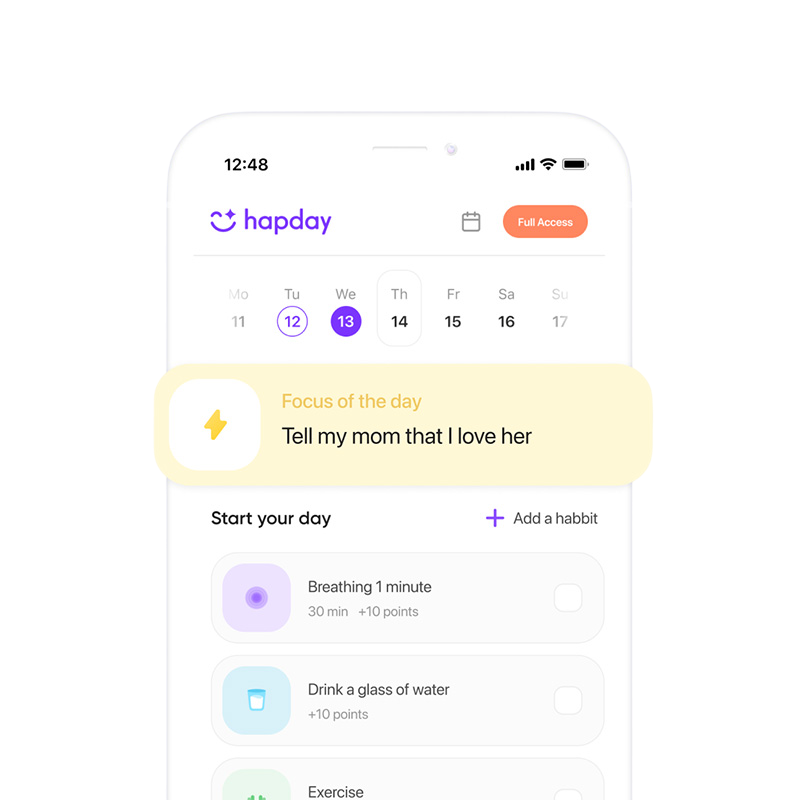
Setting limits starts inside: soothe your younger self, regulate your body, and speak clear, respectful no’s. Inner child healing to set boundaries helps you replace fear with self-trust, one small practice at a time. Ready for daily support? Bold moves are easier with structure.
Get guided practices and community support at hapday.me: https://hapday.me/