



Table of Contents
- Understanding Childhood Trauma and Its Impact
- The Science Behind Trauma Healing
- Practical Healing Strategies
- Building Emotional Resilience
- Looking Ahead with Hope
- The Bottom Line
Picture this: A dimly lit room, the soft shuffle of feet over a creaky wooden floor, a stark whisper that sends a chill down your spine. For those touched by childhood trauma, these fragments are not just memories; they are enduring echoes that linger. You might catch yourself sabotaging relationships or feeling crushed by solitude’s relentless weight. Ever wonder why? Why those old patterns repeat themselves, why pleasing others feels like an instinct rather than a choice, or why a gentle critique might feel as harsh as a slap?
These threads intricately lace the tapestry of lives of those who bore trauma when they were most vulnerable. Yet amidst the shadows of these stories, there’s a glimmer—a chance for healing and profound transformation. As Bessel van der Kolk articulates in “The Body Keeps the Score,” healing is not about erasing memories. It’s about comprehending how they’ve shaped you and learning to coexist with that knowledge.
Ready to explore emotional freedom? To mend that raw, quiet pain from the past? This journey is intricately personal, and this piece serves to guide you through this voyage of healing.
Understanding Childhood Trauma and Its Impact
Let’s start by acknowledging what childhood trauma really means.
“Events that inflict emotional pain or distress, overwhelming our ability to cope—that’s childhood trauma.”
— Dr. Sarah Chen, NYU
Consider this—the Centers for Disease Control and Prevention report that about 61% of adults in the U.S. have endured at least one adverse childhood experience—be it neglect, abuse, or dysfunction within the household. Such events are no mere blips; they instigate long-lasting reverberations that impact not only mental health but also physical wellbeing and relationships.
- Impact on Mental Health: A study from the American Psychological Association suggests that high scores on adverse childhood experiences (ACEs) are directly linked with increased rates of depression, anxiety, and emotional volatility. Those who walk this path know its truth too well.
- Tethers on Relationships: Maybe it’s the cycle of toxic relationships that feels too familiar. Think of Maya, 28, who came to realize her trust issues stemmed from an erratic home environment. On peeling back the layers of her past, she unraveled the ‘whys’ of her current fears and reactions.
- Bodily Toll: The World Health Organization observes how chronic childhood stress lays a foundation for conditions like heart disease, diabetes, or autoimmune disorders—thanks to stress hormones that run amok. These are not maladies of the mind alone; they’re carved into the body too.
The Science Behind Trauma Healing
Before going headlong into healing techniques, understanding why they work is crucial. Trauma’s weight isn’t confined to our minds—it’s etched in our bodies, too. Harvard University research states that our brains forge neural pathways in response to repeated stress, forming deeply ingrained emotional responses. But here’s hope—our brain’s plastic.
Neuroplasticity: This concept might be the key. Essentially, neuroplasticity isn’t just jargon; it’s the brain’s ingrained ability to morph. By intertwining fresh experiences with novel ways of thinking, you can rewrite those old mental scripts.
Body Memory and Somatic Healing: Pioneering thought leaders like Bessel van der Kolk emphasize the body’s role as a repository for trauma. Integrative practices like yoga or deep breathing gently unstuff the body’s stress-filled grip, engaging the parasympathetic nervous system—moving from distress to rest.
Practical Healing Strategies
Now, let’s delve into practical strategies for healing—remember, healing from childhood trauma isn’t a one-size-fits-all journey. It’s deeply personal.
- Embrace Your Inner Child: Understanding and caring for your inner child can liberate. Think visualization techniques, perhaps—imagine comforting your younger self, addressing unmet emotional needs. It’s about offering love to parts of yourself that still silently ache.
- Mindfulness and Meditation: These approaches ground you in the present. By relinquishing past fears and future anxieties, they nurture emotional balance. Start small—five minutes a day, simply breathing and acknowledging thoughts without clinging.
- Therapeutic Support: Therapy, like EMDR or CBT, can be a cornerstone. The National Institutes of Health note how therapy aids in reconfiguring emotional processing and fortifying resilience.
- Creative Expression: Art, music, or writing can serve as powerful channels. When words fail, let creativity bridge the gap. Journal, craft, play an instrument—connect with the subconscious, letting feelings flow uninhibited.
- Forgiveness: It’s not about reconciling with those who’ve wounded you; it’s about unburdening yourself from the chains of resentment. Forgiveness kindles emotional freedom—a release, almost.
Building Emotional Resilience
Healing extends beyond unearthing the past; it also involves developing tools to steer the future. Emotional resilience is a lynchpin of emotional liberty.
- Set Boundaries: These create emotional sanctuaries, a sort of fortress around what’s acceptable in relationships and engagements. It’s empowering in dispelling helplessness, cultivating inner strength.
- Community and Connection: Never underestimate shared experiences and the community’s role. Find your tribe—people who bolster your journey. Support groups, be they virtual or physical, validate your experiences and foster mutual support.
- Routines for Self-Care: Regularly tending to mental, emotional, and physical health nurtures resilience. A gratitude journal at night or brisk morning walks amidst nature enhance positivity and maintain equilibrium.
Looking Ahead with Hope
If this resonates, understand—you are not alone. Your path to emotional freedom exists, and healing is a lifelong endeavor. Yet, each step forward lightens your burden and honors your power to turn trials into strength.
You hold the reins to reshape your story. To relinquish the burdens of the past and craft a future free from its shackles. While courage and commitment are necessary, they unlock a life of deeper bonds, enduring joy, and tranquility.
Picture healing not as a destination but a perpetual journey of growth and self-rediscovery. With every step, remind yourself of your resilience and your intrinsic capacity to heal.
Key Takeaways
- Understanding the deep impact of childhood trauma is the first step toward healing.
- Neuroplasticity allows us to reshape our emotional responses through new experiences.
- Practical healing strategies such as mindfulness, creative expression, and therapeutic support can facilitate recovery.
- Building emotional resilience is essential for lasting healing and emotional freedom.
- Support systems play a vital role in the journey of recovery.
The Bottom Line
Healing from childhood trauma is a unique and ongoing journey. It requires patience, courage, and the commitment to foster not just recovery but also emotional freedom. Every effort you make is a step toward creating a brighter future.
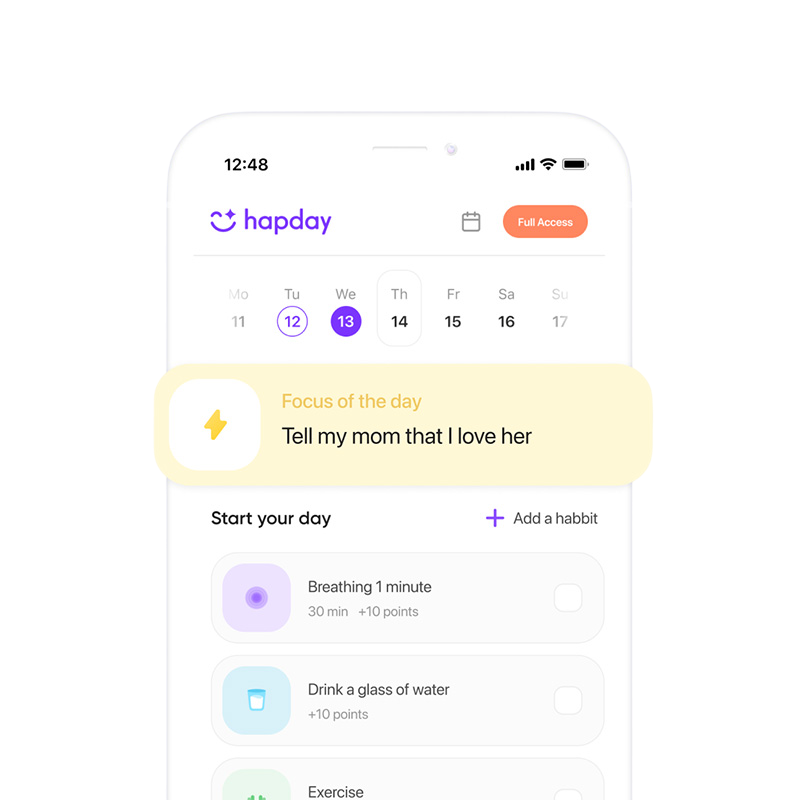
Discover guided self-healing programs and daily support for emotional growth with hapday.me. Start your journey towards emotional freedom today at hapday.me.
References
- Centers for Disease Control and Prevention (CDC)
- American Psychological Association (APA)
- World Health Organization (WHO)
- Harvard University